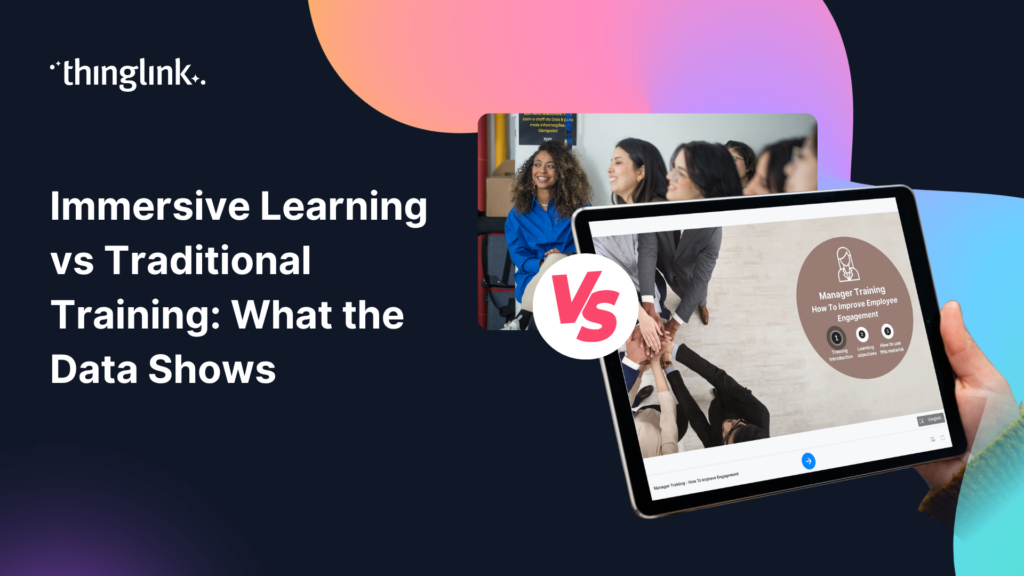
Immersive Learning vs Traditional Training: What the Data Shows
Immersive Learning vs Traditional Training: What the Data Actually Shows
You've sat through the slide decks. You've administered the compliance click-throughs. And you've watched completion rates climb while knowledge retention quietly flatlines. If you're an L&D manager weighing up whether immersive learning is genuinely better than traditional training — or just better-looking — this post is for you.
The good news: there's real research to lean on. The even better news: the data points in a clear direction.
Why Traditional Training Has a Retention Problem
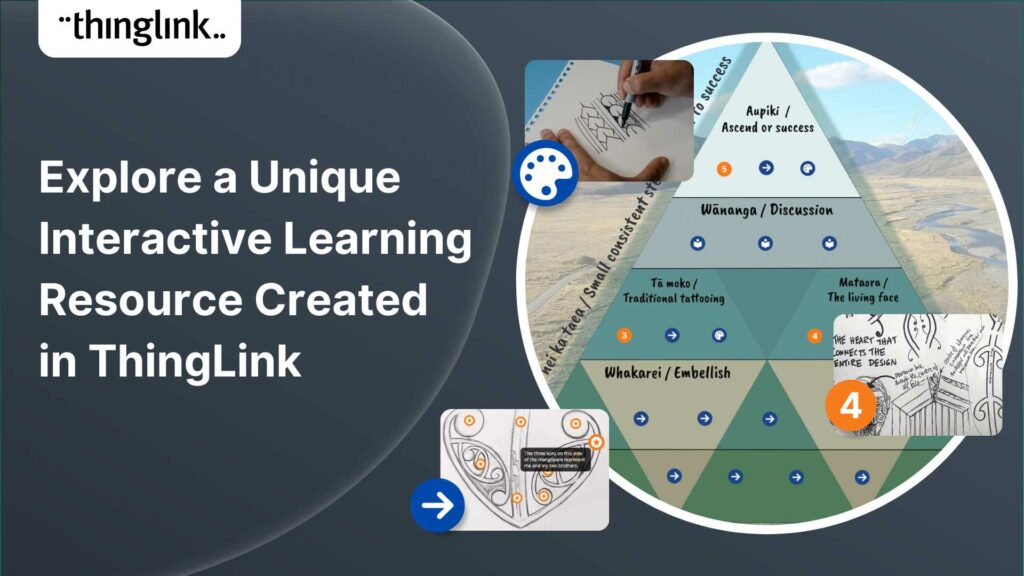
In action! Explore this example.
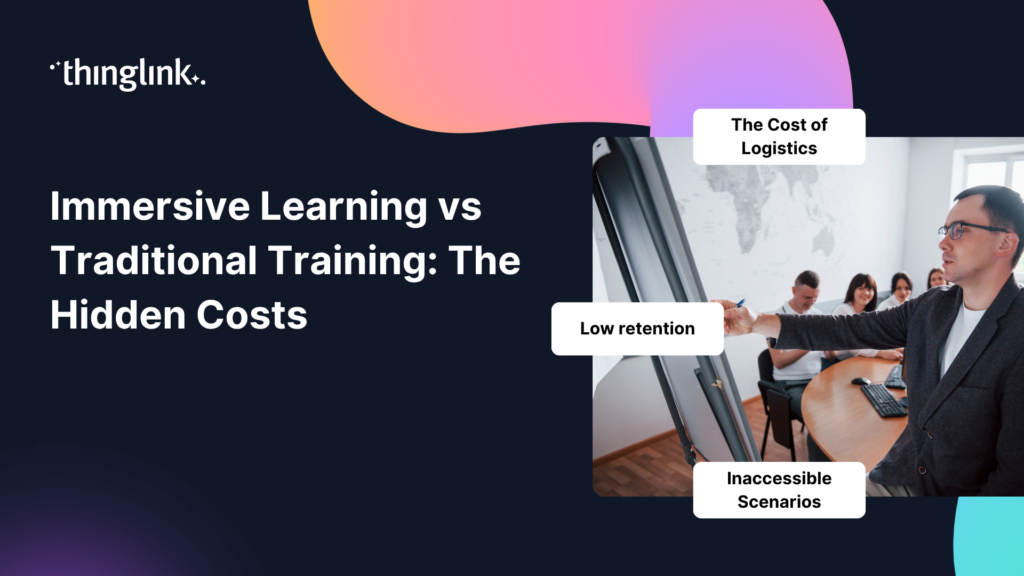
Traditional training methods — instructor-led sessions, static e-learning modules, PDF handbooks — have served organisations for decades. They're familiar, relatively cheap to produce, and easy to track. But familiarity isn't the same as effectiveness.
The core problem is passive engagement. Learners read, watch, or listen. They don't do. And when the brain isn't actively constructing meaning through experience, information tends not to stick.
Research consistently points to the "forgetting curve," the idea that people forget a large proportion of new information within days if it isn't reinforced. Traditional training rarely provides the contextual, repeated practice needed to move knowledge into long-term memory.
For L&D managers, that gap between training delivery and real-world performance is more than a frustration — it's a measurable business risk.
What the Research on Immersive Learning Actually Tells Us
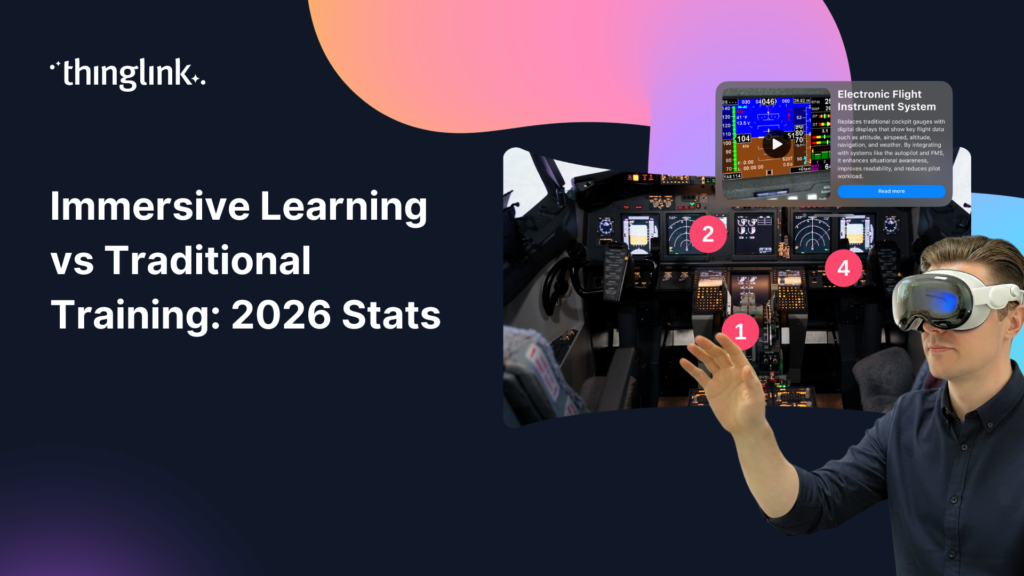
Immersive learning covers a spectrum: scenario-based e-learning, interactive 360° environments, virtual reality (VR), augmented reality (AR), and AI-assisted simulations. What unites them is active, contextual engagement. Learners aren't watching someone else do the job — they're practising it themselves.
The research findings are worth examining closely. Studies into VR-based employee training have found meaningful improvements in knowledge retention, learner confidence, and time-to-competency compared to traditional classroom or e-learning equivalents. ThingLink's own deep-dive into the latest research into VR methods of employee training unpacks the specific findings L&D teams should know about.
Key themes that emerge from the evidence include:
- Higher retention rates. Learners who engage with immersive scenarios remember more, for longer, because they are processing information through experience rather than passive exposure.
- Greater emotional engagement. Immersive environments trigger the emotional responses associated with real situations, which strengthens memory encoding.
- Faster skill transfer. Because learners practise in simulated contexts that mirror real work, the gap between training and performance shrinks.
- Increased learner confidence. Simulated environments let people make mistakes safely, which builds the kind of confidence that traditional training rarely achieves.
The Safety Training Case: Where the ROI Becomes Undeniable
Safety training is one of the most compelling arenas for comparing immersive and traditional approaches — because the stakes are high and the outcomes are measurable.
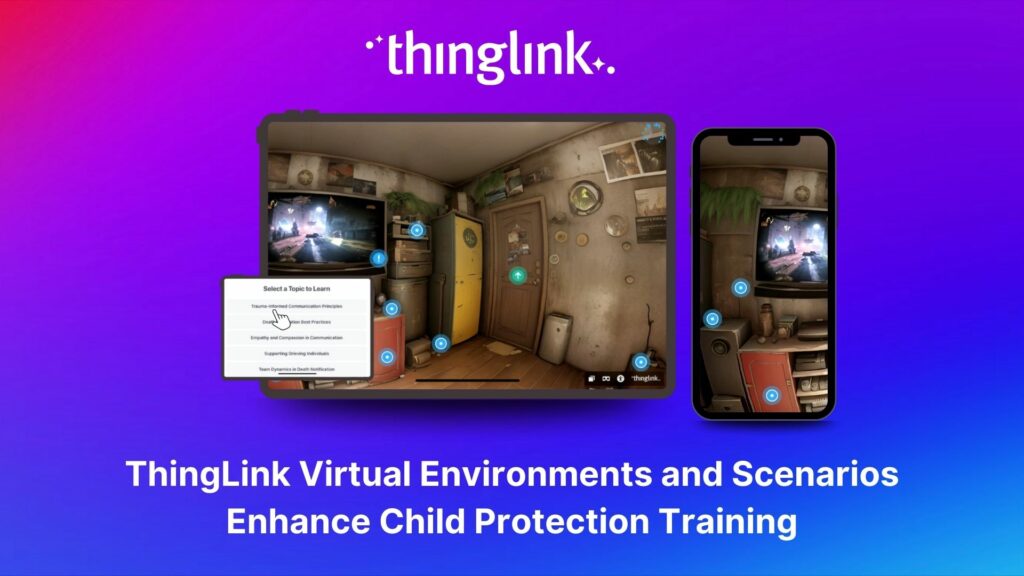
Traditional safety training often involves reading procedures, watching demonstration videos, or attending classroom sessions. The problem is that high-risk situations are exactly the ones where passive learning is least effective. When a real emergency occurs, a learner who has only read about the procedure is far less prepared than one who has practised navigating it.
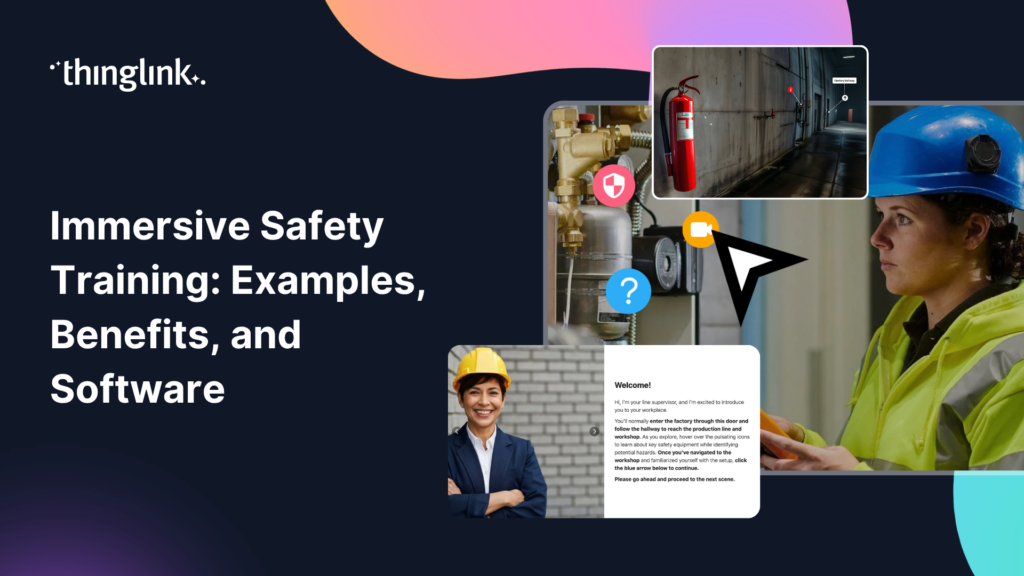
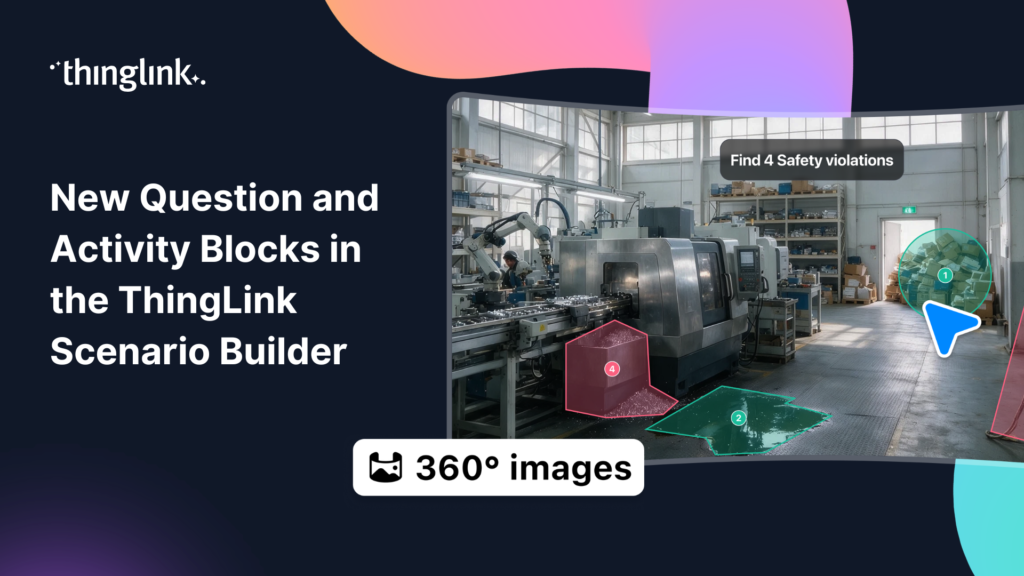
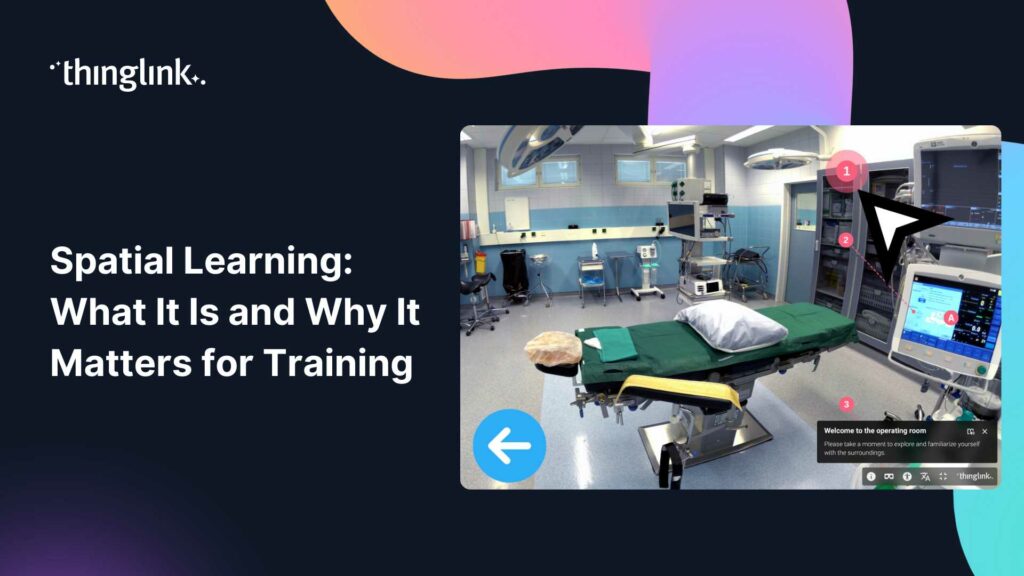
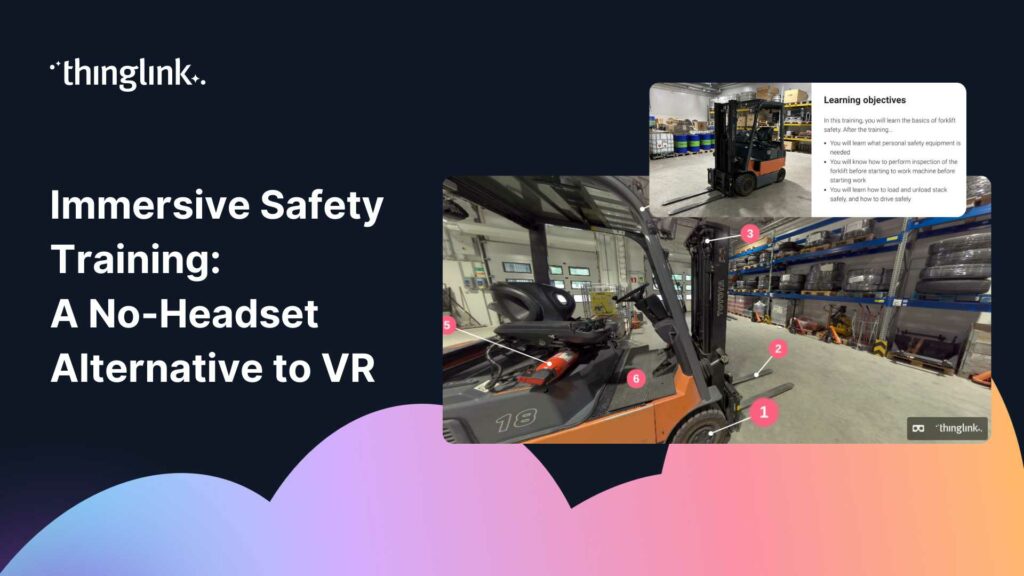
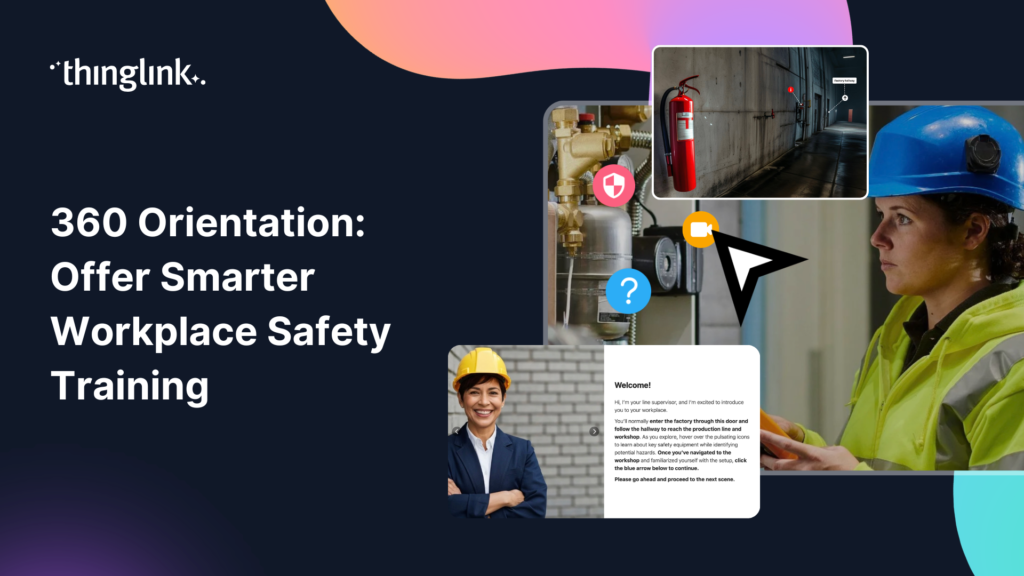
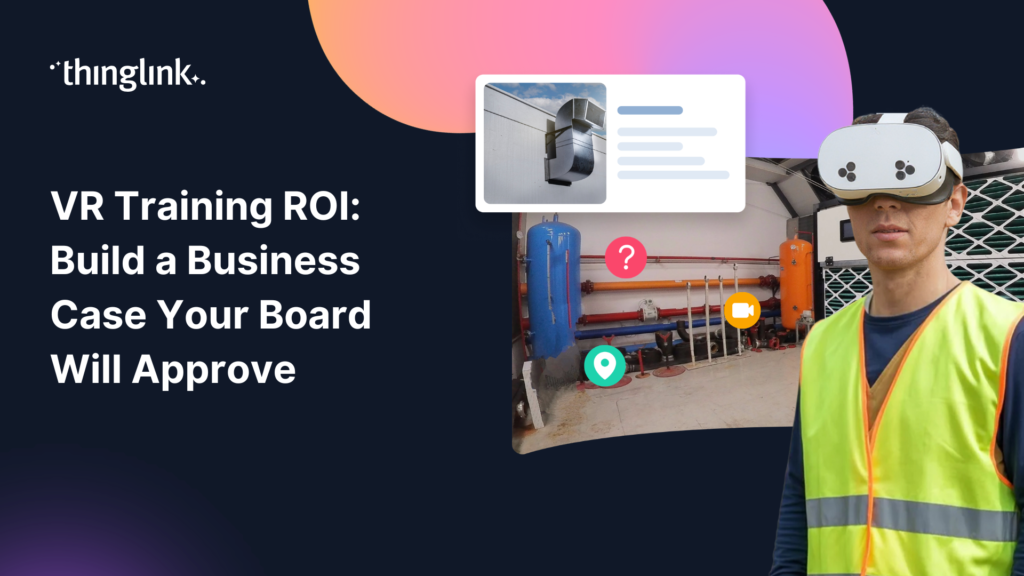
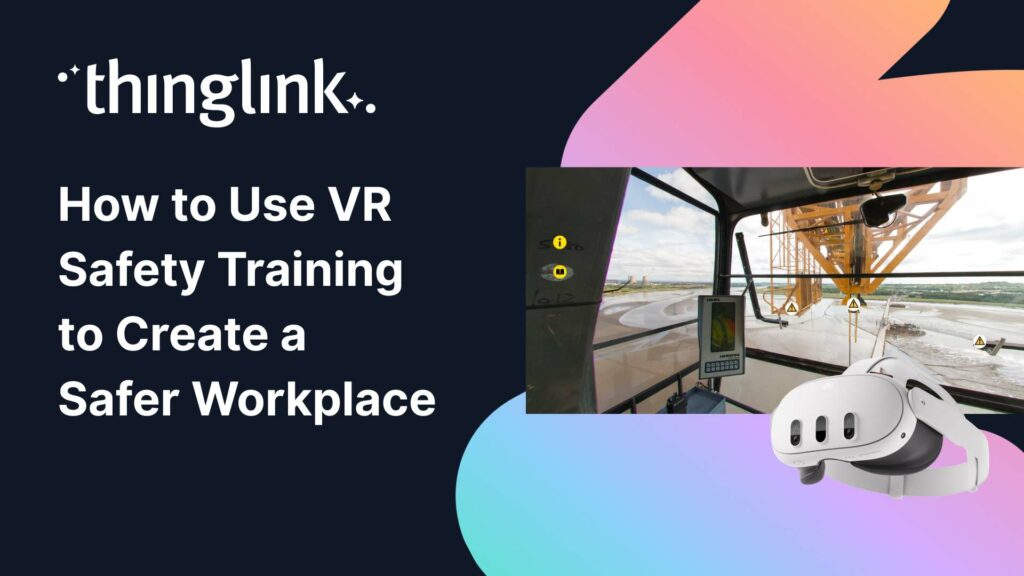
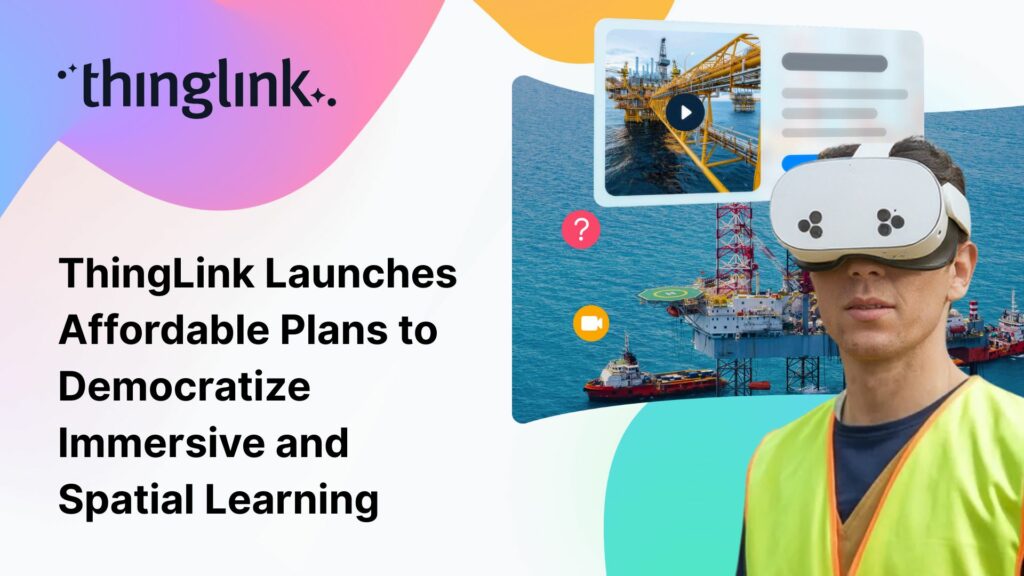
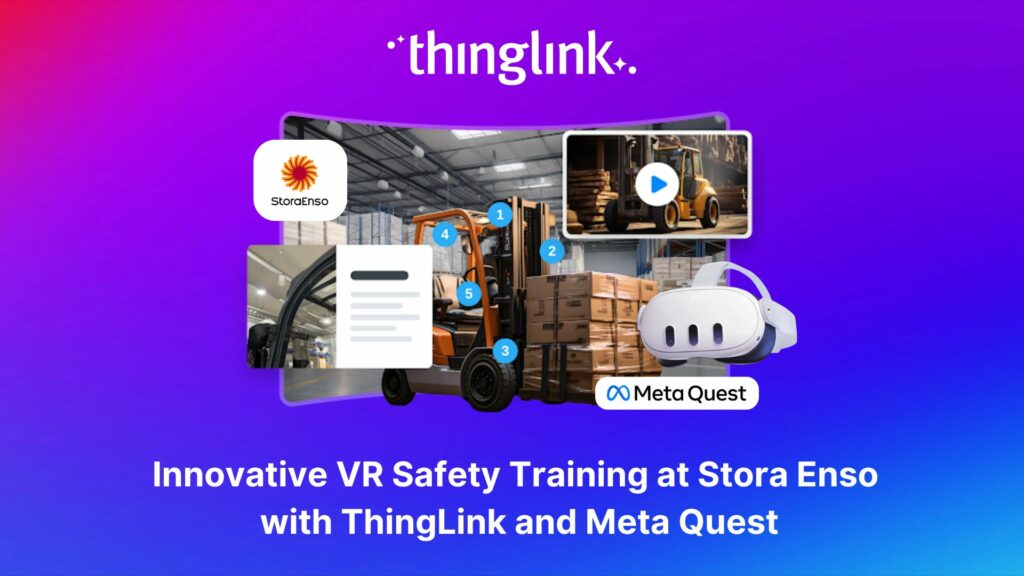
Immersive safety training addresses this directly. Learners can enter realistic simulations of hazardous environments — confined spaces, factory floors, emergency scenarios — without any physical risk. They can rehearse decision-making under pressure, repeat scenarios as many times as needed, and build genuine procedural memory.
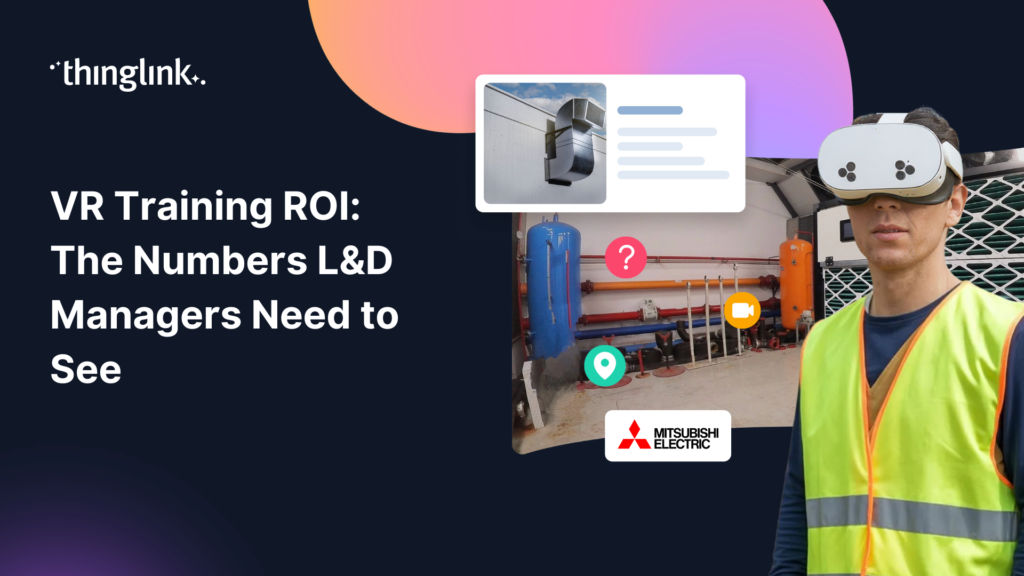
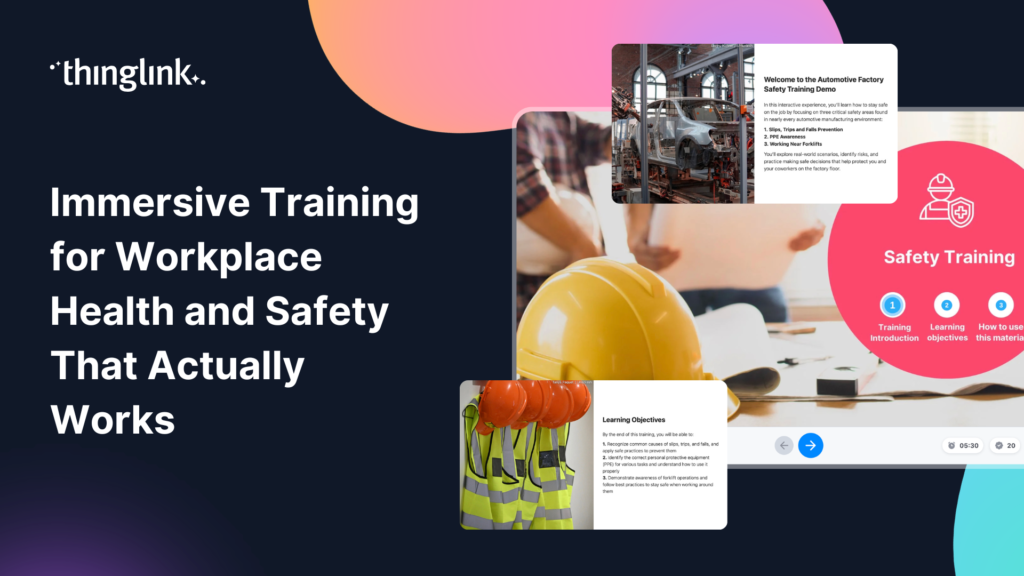
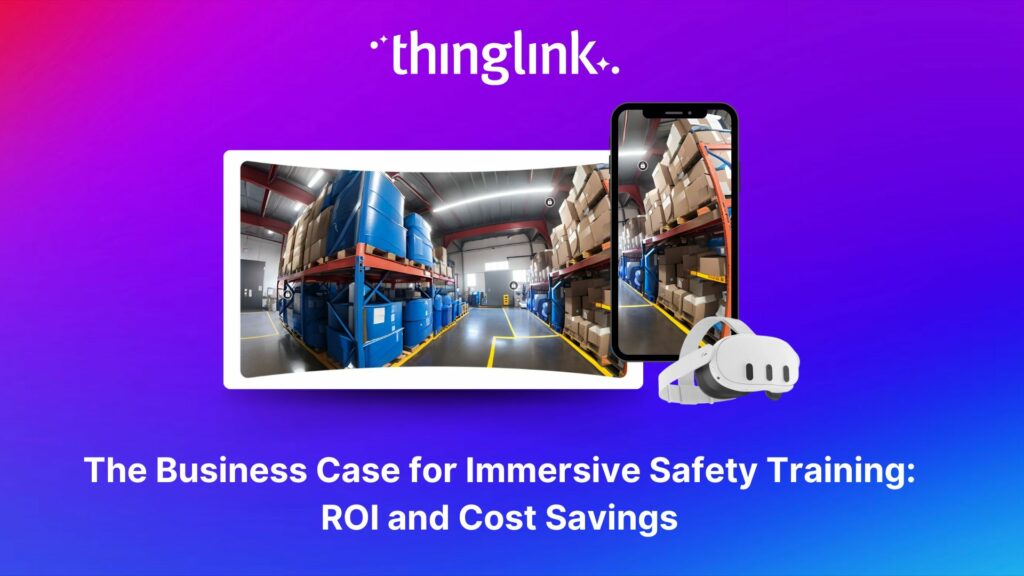
The business case is equally strong. The business case for immersive safety training details the ROI and cost savings that organisations are realising, from reduced incident rates to lower retraining costs. And for a practical look at how this works in practice, immersive training for workplace health and safety outlines approaches that are already delivering results.
Technical and Vocational Training: Closing the Competency Gap
The same logic applies to technical and vocational training, where the gap between knowing and doing can be especially costly. Apprentices and trainees need repeated hands-on practice, but that practice is often limited by access to equipment, supervision time, or physical environments.
Immersive learning can replicate those environments digitally, giving learners unlimited access to practice scenarios that would otherwise be constrained by real-world logistics. A trainee engineer can walk through a complex machinery fault. A healthcare student can repeat a clinical procedure until it becomes automatic.
The potential here goes well beyond convenience. As explored in how immersive learning can transform technical and vocational education, immersive approaches are actively reshaping what's possible in skill development — particularly for learners who don't have access to expensive equipment or facilities.
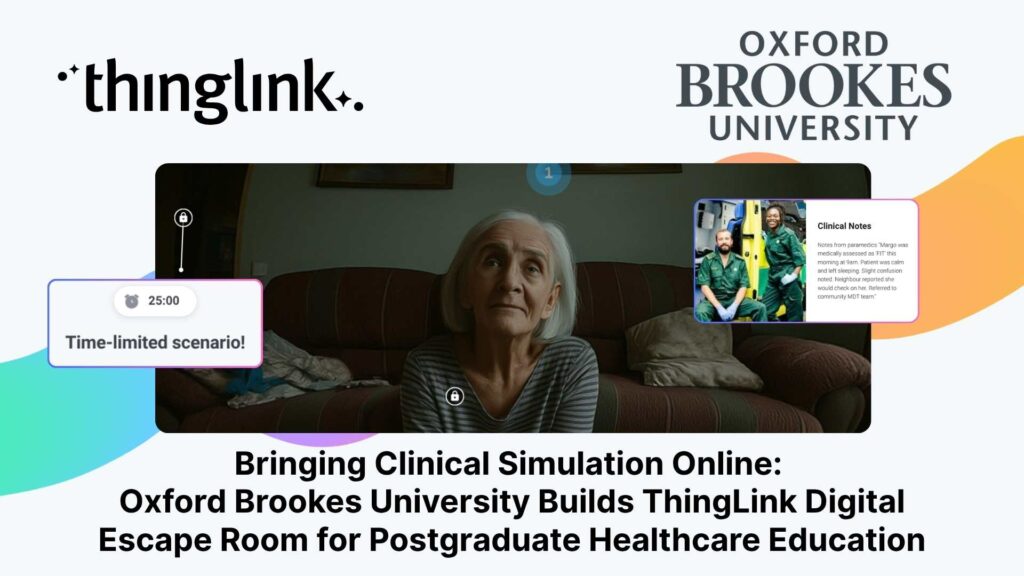
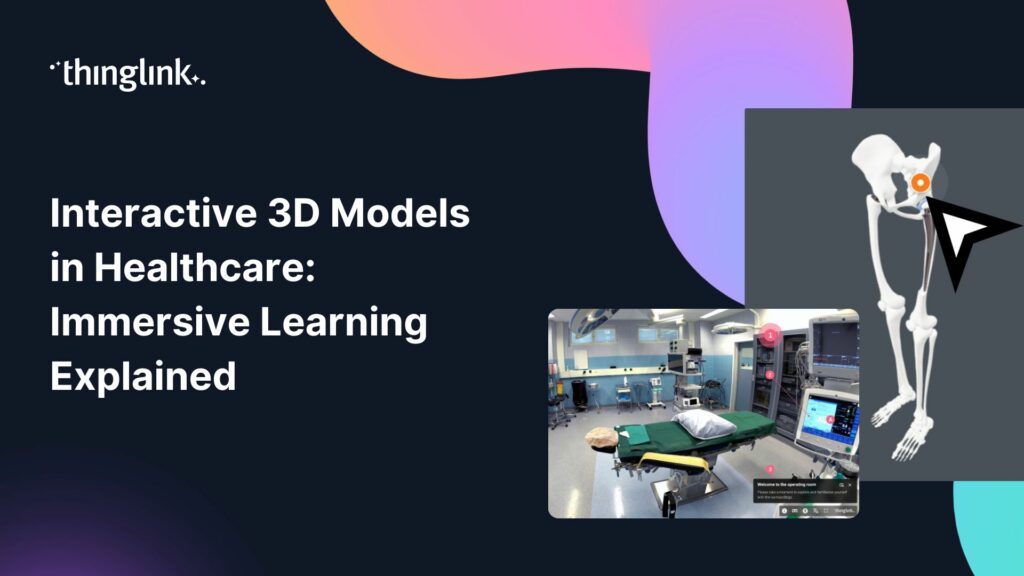
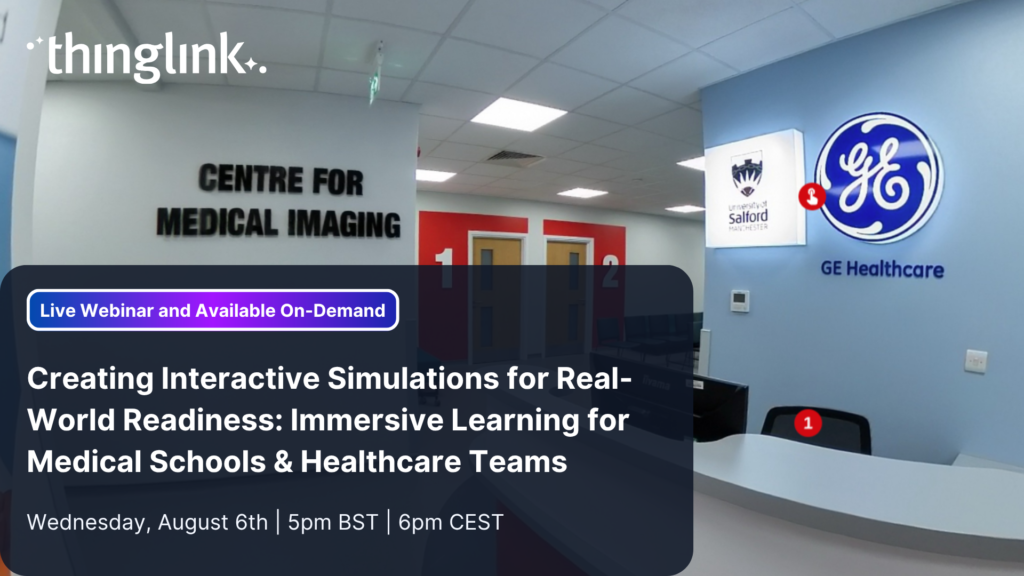
For medical education and healthcare training, the evidence is similarly strong. Creating immersive learning for medical schools and healthcare teams shows how institutions are using virtual environments to prepare clinical staff in ways that classroom instruction simply cannot replicate.
"But What About the Cost?": Addressing the Biggest Objection
This is the question most L&D managers raise — and it's a fair one. Traditional training can feel cheap to produce, especially if you already have an LMS and a library of existing content.
Here's the reframe: the true cost of traditional training isn't just the production cost. It's the cost of poor retention, repeated retraining cycles, compliance failures, workplace incidents, and underperforming staff. When you factor in those downstream costs, the economics of immersive learning often look very different.
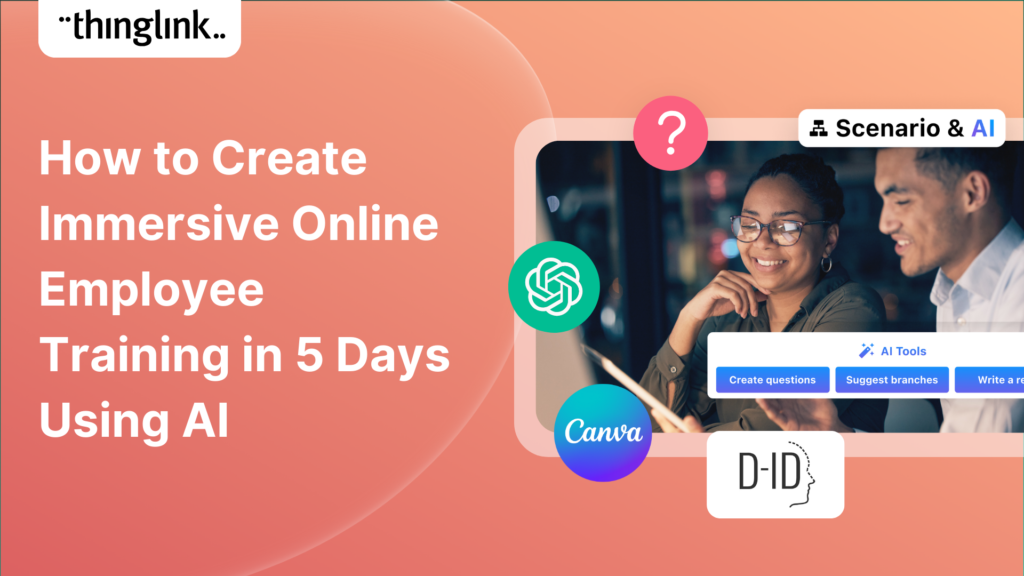
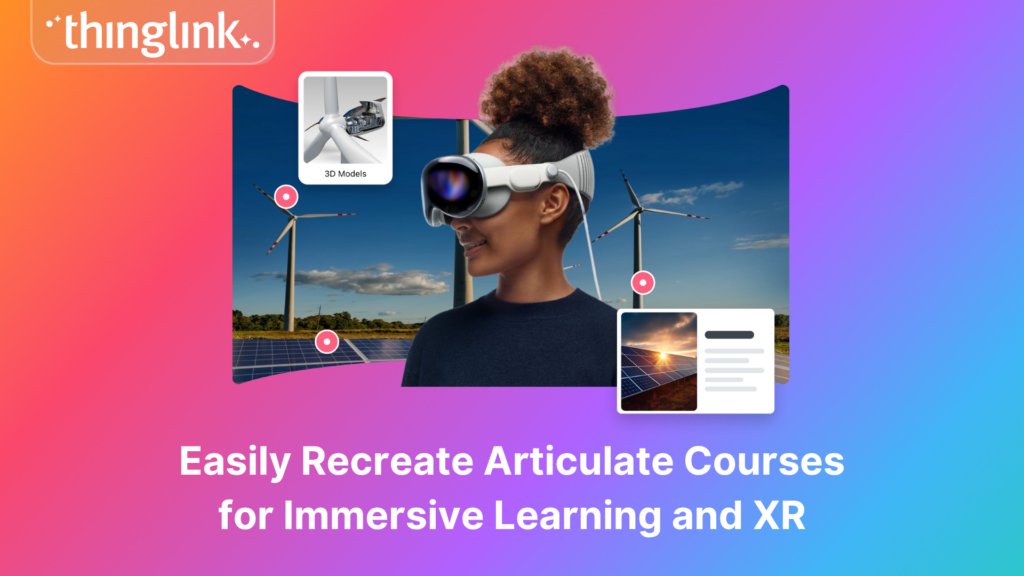
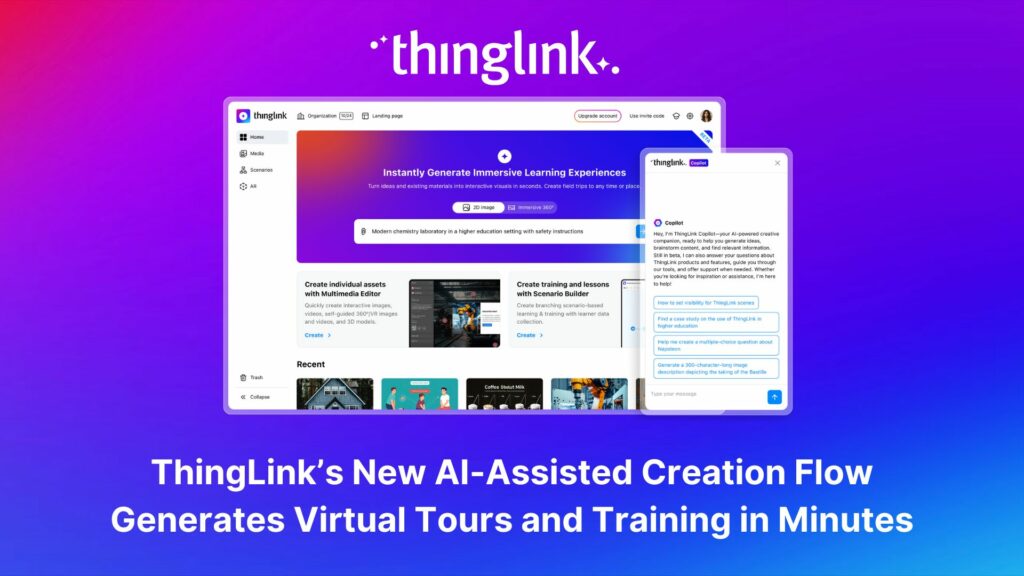
Beyond that, the assumption that immersive learning requires a large specialist team and a long runway is outdated. Modern platforms like ThingLink allow L&D teams to build immersive, interactive experiences without specialised technical skills. Creating immersive online employee training in 5 days using AI demonstrates just how accessible the production process has become.
The barrier to entry is lower than most L&D managers expect. And the competitive advantage of getting there early is significant.
Shared Immersive Spaces and the Future of Collaborative Training
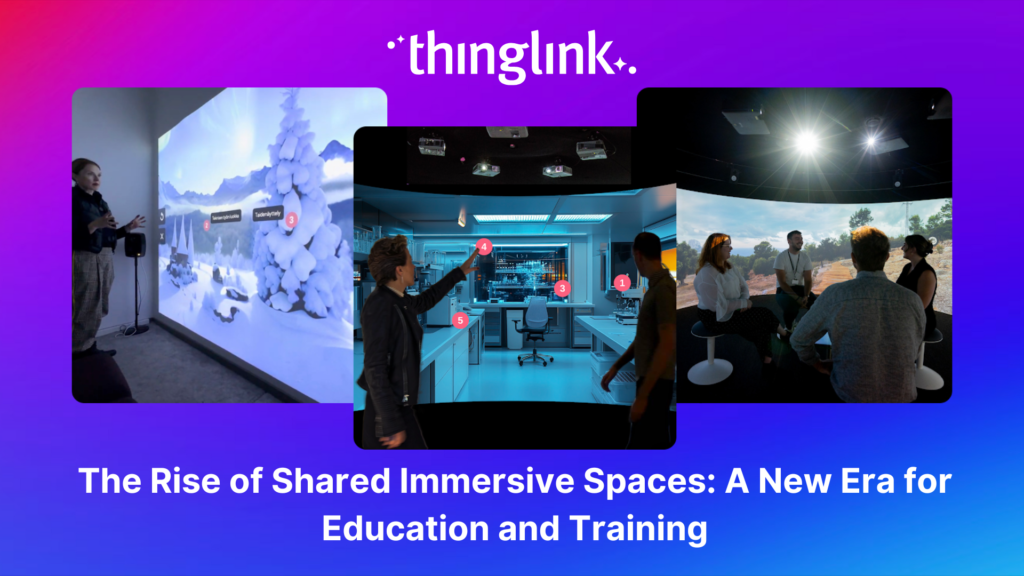
One development worth watching closely is the emergence of shared immersive environments, where multiple learners participate in the same virtual space simultaneously. This shifts immersive learning from a solo activity to a genuinely collaborative one — much closer to how work actually happens.
Think onboarding cohorts exploring a new workplace together, safety drills where teams practise coordinating their responses in real time, or customer service scenarios where roleplay happens in a shared virtual environment. The rise of shared immersive spaces explores why this matters and what it signals about the direction of workplace learning.
For L&D managers, this is a significant development. It means immersive learning is no longer just about individual skill-building. It's becoming a tool for shaping team culture, shared knowledge, and collective behaviour.
What L&D Teams Are Switching Away From — and Why
It's worth acknowledging that many L&D teams are coming to immersive learning from established authoring tool ecosystems. The decision to explore alternatives isn't always about dissatisfaction — sometimes it's about what those tools simply can't do.
If you're working with a platform that handles linear e-learning well but can't support 360° environments, interactive virtual tours, or AI-assisted scenarios, you'll hit a ceiling. Why learning teams are exploring immersive learning platforms as Articulate alternatives is an honest look at what's driving those conversations.
The shift isn't about abandoning what works. It's about expanding your toolkit to include what your learners increasingly need.
Making the Transition: Practical Starting Points
If you're ready to move beyond the comparison and start building, here are three practical entry points.
Start with a High-Stakes Use Case
Don't try to convert your entire training library at once. Pick a use case where the gap between traditional training and real performance is most visible — a safety induction, a technical procedure, a customer service scenario. Build something immersive for that use case first, measure it, and use the results to build the internal case for wider adoption.
Use AI to Speed Up Content Creation
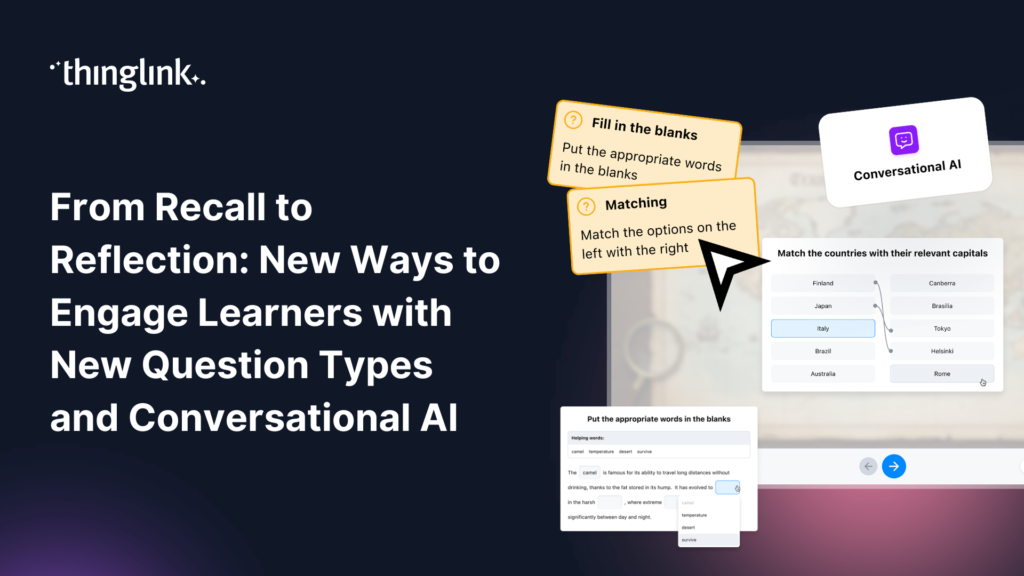
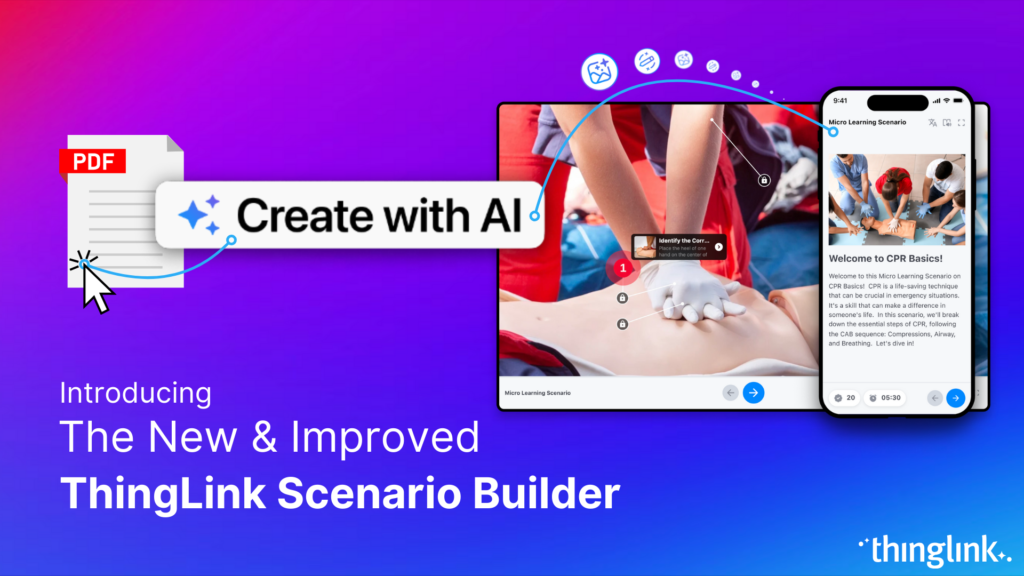
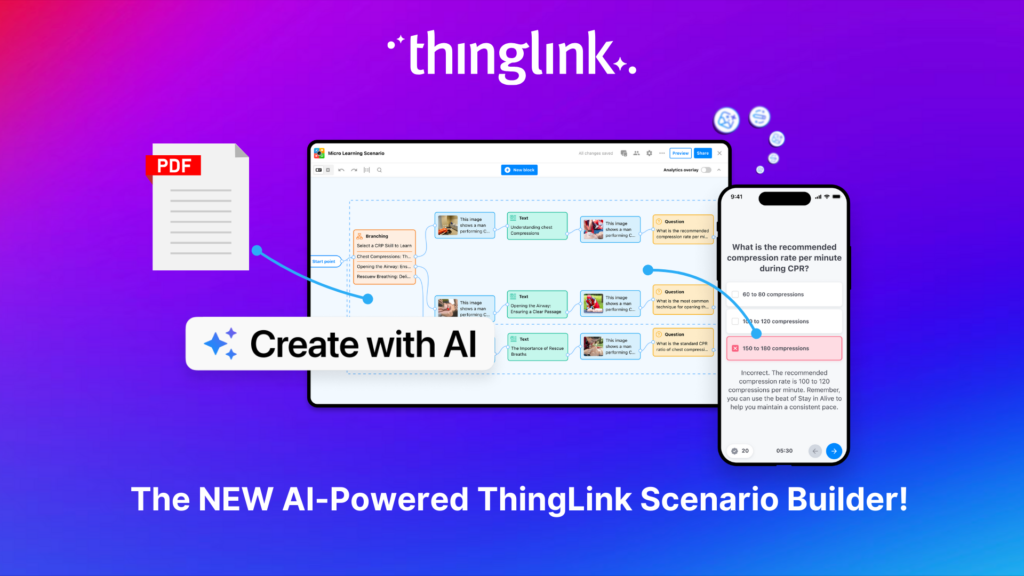
One of the biggest barriers to immersive learning at scale is content production time. AI-assisted tools within platforms like ThingLink dramatically reduce that burden. From generating scenario branches to producing supporting content, AI lets small L&D teams punch well above their weight.
Build Your Skills Alongside Your Content
If you're new to creating immersive experiences, there are structured ways to get up to speed quickly. The ThingLink Creator Course is designed specifically for educators and L&D professionals who want to build confidence and capability in creating interactive, immersive learning experiences.
The Verdict: What the Data Actually Shows
The evidence for immersive learning vs traditional training isn't just suggestive — it's directional. Across retention, skill transfer, learner confidence, and measurable safety outcomes, immersive approaches consistently outperform their passive equivalents.
That doesn't mean traditional training disappears overnight. For some content types — policy communication, factual reference material, lightweight onboarding — simpler formats remain perfectly appropriate. The key is knowing when immersion genuinely changes outcomes, and building your strategy around those moments.
For L&D managers who want to lead with evidence, the data is there. The platforms are accessible. And the learners are ready.
Ready to see what ThingLink can do for your training programmes? Explore how to create realistic virtual learning environments for trainees or discover how CEBS Global is revolutionising online training with ThingLink.