Where the Past has an Exciting Future: Making the Ancient World Accessible for All at the University of Arizona
Background
Dr. Rob Stephan is a classical archaeologist and Associate Dean of the Franke Honors College at the University of Arizona, whose teaching centers on ancient Greece and Rome. Having led many study abroad trips to Greece and Italy, he had seen firsthand how direct exposure to historical sites could be truly transformative for students. However, at a large public university, many students are unable to participate in international travel due to financial constraints, summer employment commitments, or family responsibilities. This reality inspired Dr. Stephan to find a way of providing an affordable, low-cost way to give students a taste of the experience of being in Italy or Greece, even if it could never be exactly the same as traveling.
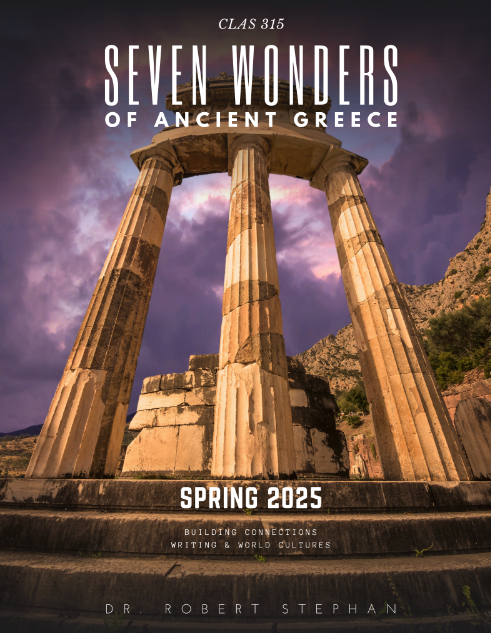
In winter 2022, he secured funding and obtained filming permits from the Greek government. He and a colleague then traveled to Greece to record 360-degree video lectures at seven significant archaeological sites, framed around the concept of the “Seven Wonders of Ancient Greece” from an archaeological and historical perspective. The intent was to establish a scalable model that could be applied to other locations such as Egypt, Italy, India, or indeed anywhere in the world. The content was filmed and post-processed throughout 2023, and the resulting lectures were kept intentionally unannotated to preserve a sense of immersion.
Challenge: How to Move from Content Consumption to Content Creation?
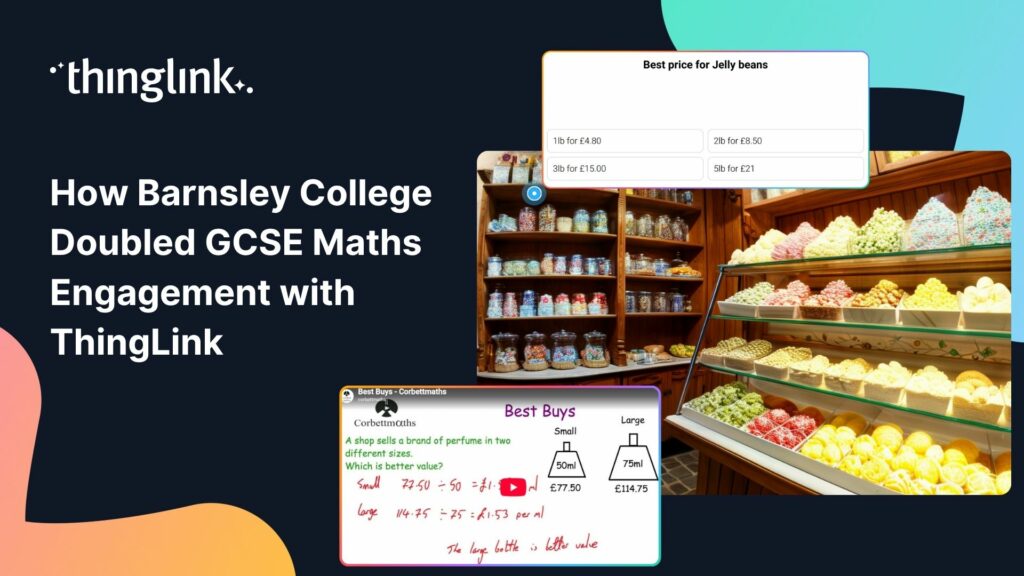
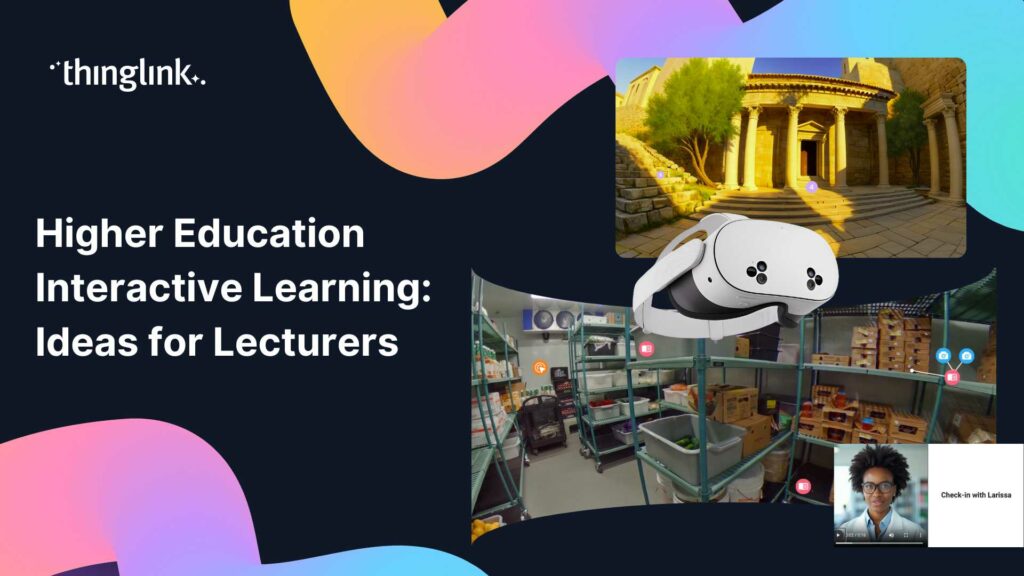
The 360-degree lecture content gave students a richer sense of place than traditional materials. Students could also engage with the experiences in whatever way they preferred — on a desktop, via a low-cost cardboard or plastic headset with a smartphone, or using a dedicated VR headset borrowed from the university library. But Dr. Stephan wanted to go further. Passive viewing, even of immersive video, still positions students as observers rather than active participants. The pedagogical goal was to move students from consumption to creation — to have them engage deeply enough with the historical material that they could design interactive experiences for an audience of their own.
The fully online, general studies course, Seven Wonders of Ancient Greece, also presented a logistical challenge: with over 700 enrolled students, meaningful engagement and authentic interaction between peers was difficult to achieve through conventional discussion formats. Dr. Stephan needed a tool that fulfilled the following set of criteria:
- flexible enough to accommodate a wide range of student approaches,
- accessible to students with varying levels of technical skill,
- scalable enough to manage across a very large, fully online cohort.
Finding the right software was not straightforward. Dr. Stephan was initially uncertain whether there was a tool capable of supporting the kind of interactive, narrative-driven experiences he envisioned. He identified ThingLink as a strong candidate, and timing worked in his favor: the university was simultaneously offering a pilot grant to trial the platform in exchange for student feedback, covering the cost of the license and providing a structured basis for institutional evaluation.
Solution: ThingLink
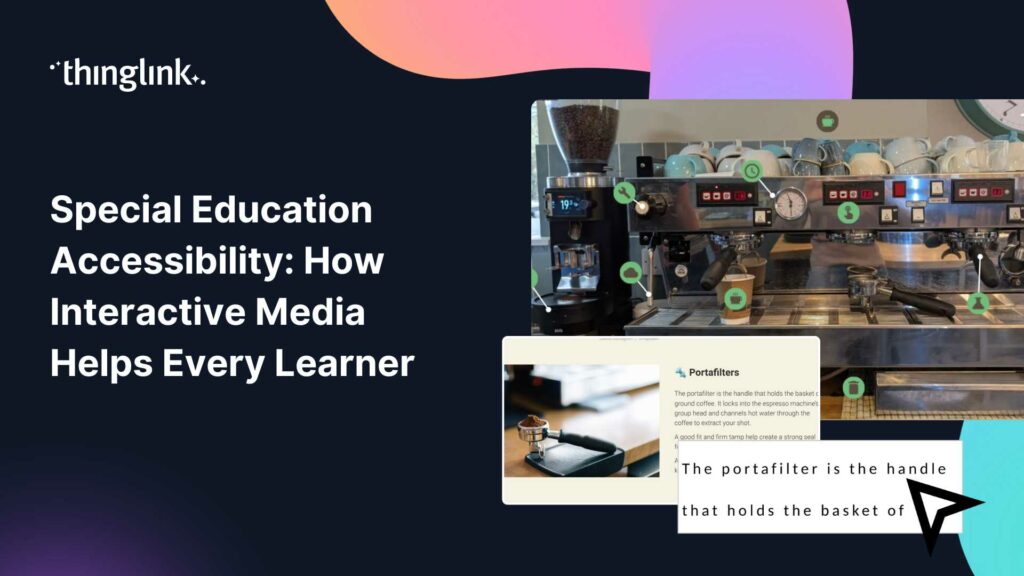
Dr. Stephan built ThingLink into the course as the vehicle for the final project in his Honors stream, framing the task around a design challenge rather than a standard assignment. Students were asked to create an interactive experience set in ancient Greece — using ThingLink to annotate 360-degree video clips of three ancient monuments, making them interactive and engaging for viewers. The project had to cover at least three sites or monuments, each with a minimum of three interactive elements.
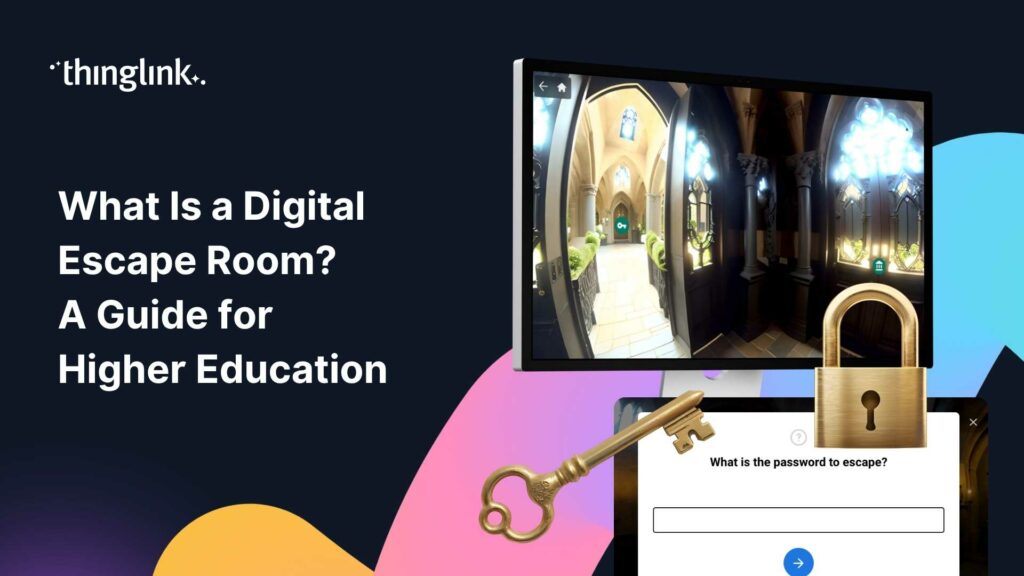
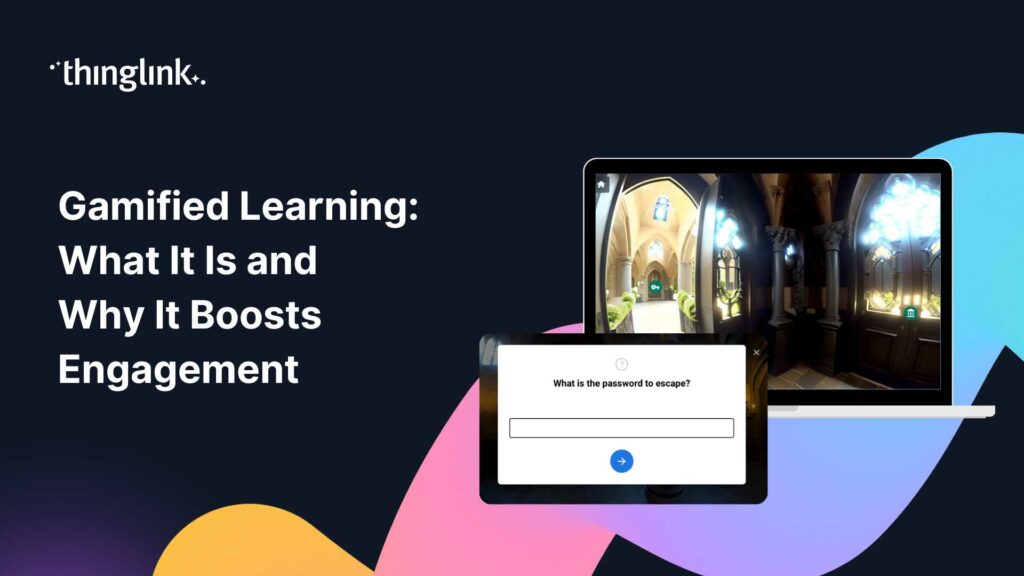
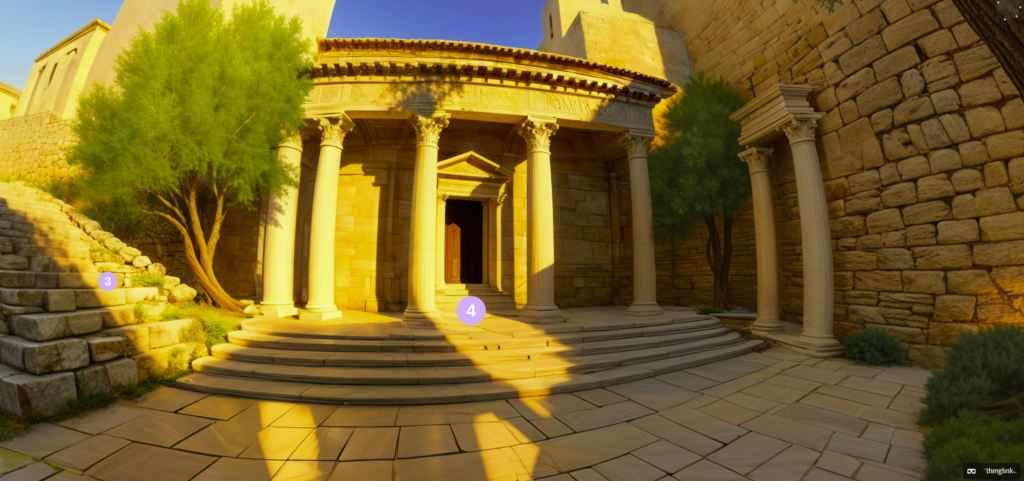
For students taking the course as an Honors subject, Dr Stephan set a slightly more complex challenge: create either a virtual escape room, OR a choose-your-own-adventure story, incorporating 5 to 10 monuments or sites, each with at least 5 annotations/tags. The brief encouraged them to integrate historical accuracy, archaeological insight, and creative storytelling.The Honors students could draw on the 360-degree course videos that Dr Stephan had filmed on site, independently sourced imagery, and AI-generated immersive landscapes created within ThingLink itself, or with external platforms such as Skybox.
The project was scaffolded across the course’s seven modules, so students understood the final goal from day one, and built toward it incrementally rather than assembling it under pressure at the end.
The resulting Honors submissions were highly varied in approach. Roughly two-thirds took the form of choose-your-own-adventure narratives, while around one-third built escape room structures requiring users to acquire knowledge in order to progress. Source materials were similarly diverse: approximately 30% of students drew on Dr. Stephan’s own recorded footage, 30% sourced images independently, and 30% combined both. A smaller group, around 10%, incorporated AI-generated imagery.
Spotlight Example
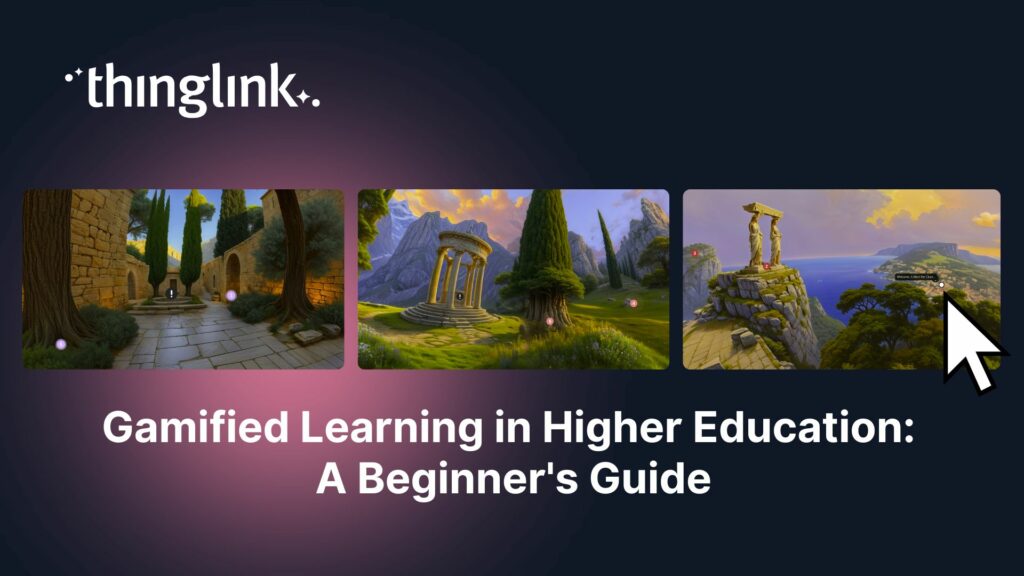
One particularly strong example was built in ThingLink by Abhilasha Kothapeta, a Neuroscience & Cognitive Science major at the University of Arizona as well as a student in the W.A. Franke Honors College.
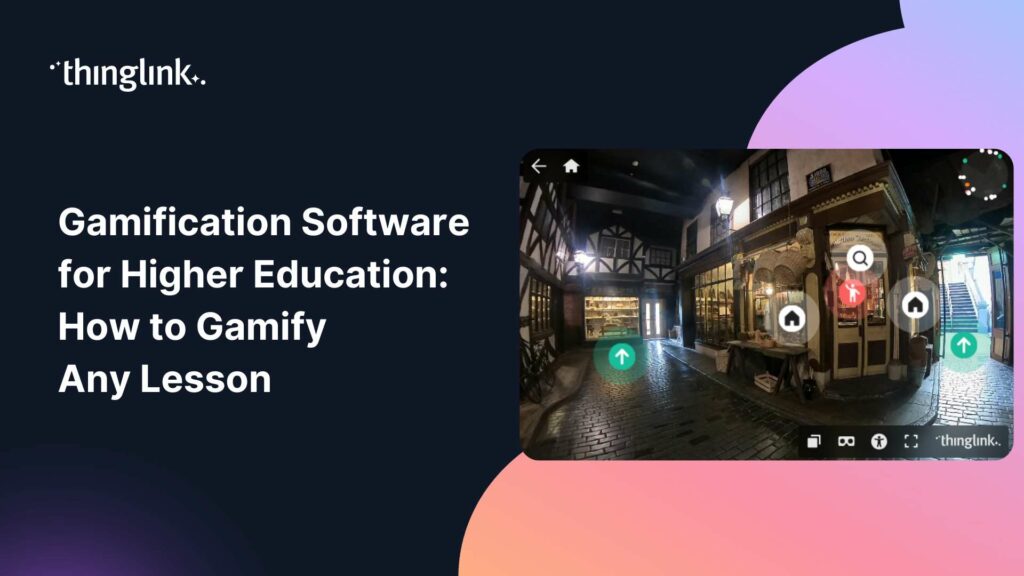
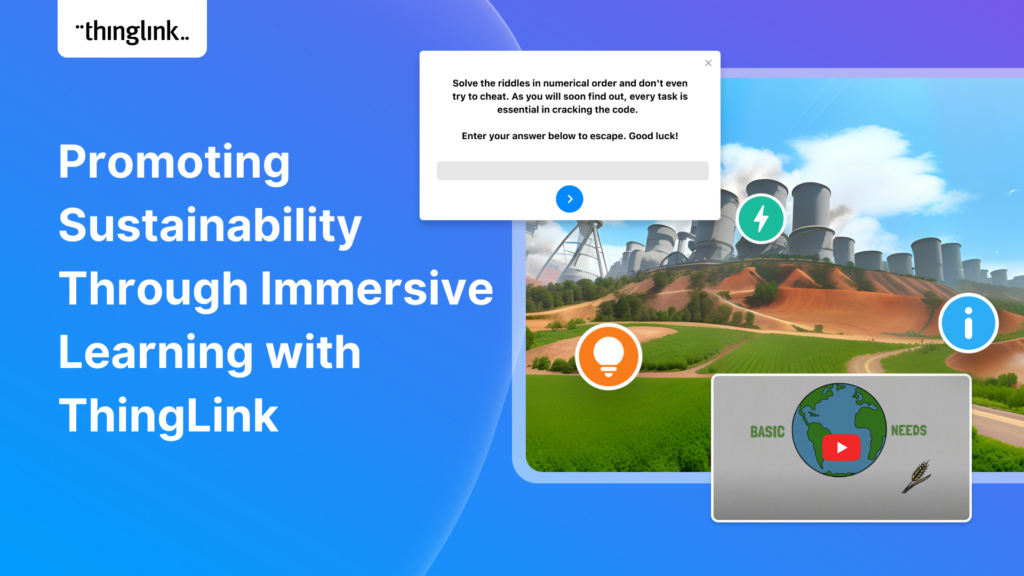
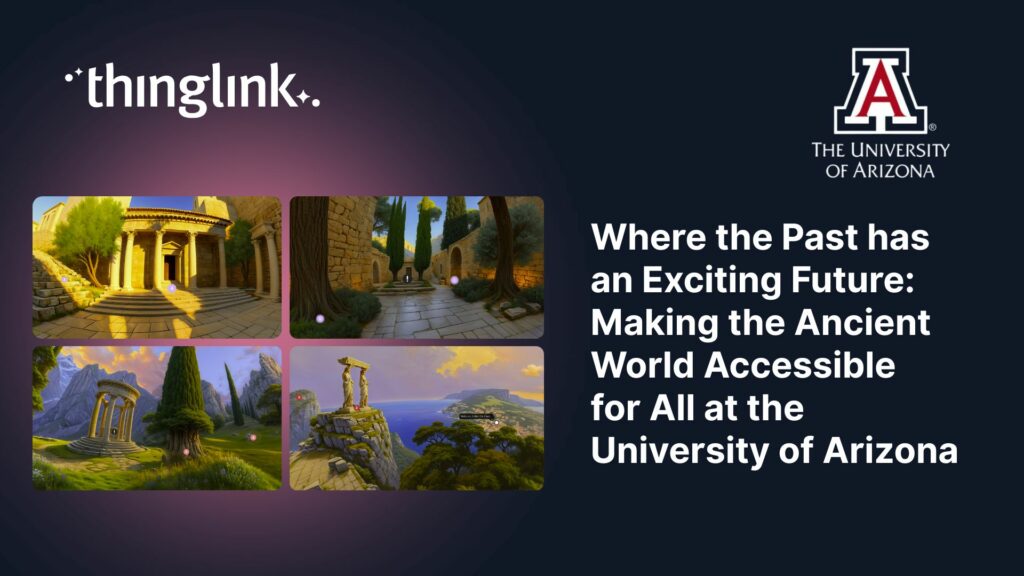
She created a combination of Escape Room and Choose Your Own Adventure story, which takes the player through the archaeological ruins of ancient Greece. All the images and video clips throughout this case study are from her project, all of which demonstrate the high quality AI-generated 360 images that are simple to create in the ThingLink creation flow.
Outcomes and Benefits
The project delivered meaningful outcomes across four dimensions.
- For students with limited means or mobility, it created genuine access to historical environments that would otherwise be entirely out of reach. The immersive 360-degree format, even when experienced on a standard screen, conveyed a sense of scale and geographical context that static images cannot replicate.
- It also made learning active rather than passive. Students were not simply reviewing content; they were making editorial and curatorial decisions about how to present it, which required them to engage with the material at a deeper level than conventional assessment formats typically demand.
- The design requirement — building an experience for a specific audience — developed a highly transferable communication skill. Students had to think carefully about how to sequence information, what to foreground, and how to sustain engagement, skills with broad applicability beyond the discipline.
- Finally, the approach made the subject genuinely enjoyable. Student enrollment in Dr. Stephan’s large courses, such as one on ancient Egypt with over 1,380 students, has built up over time through word of mouth at the University. While some academics continue to teach using almost entirely traditional methods, Rob is part of a community of educators and instructional designers who gravitate towards immersive technologies, and share ideas on how to get students more engaged in what they are teaching. He occasionally receives messages from former students describing how the course content shaped their experience of real-world travel — a measure of impact that extends well beyond the classroom.
The past has an exciting future at the University of Arizona
Following a very successful and fruitful pilot, the University adopted ThingLink at an institutional level.
Dr. Stephan’s next planned development is the introduction of peer review, allowing students in future cohorts to experience each other’s projects — creating a richer form of peer interaction than a discussion board can offer, and extending the collaborative dimension of what is already an innovative, creative and highly accessible course design.
With grateful thanks to Dr Stephan, and also to Aviva Doery, PhD student in Education at the University of Arizona, and Caleb Simmons, Vice Provost of Arizona Online, for their invaluable help with facilitating this project.
Book a free consultation
If you’d like to learn more about how your school or faculty can introduce student-created immersive experiences to your curriculum, contact our Higher Education specialist.