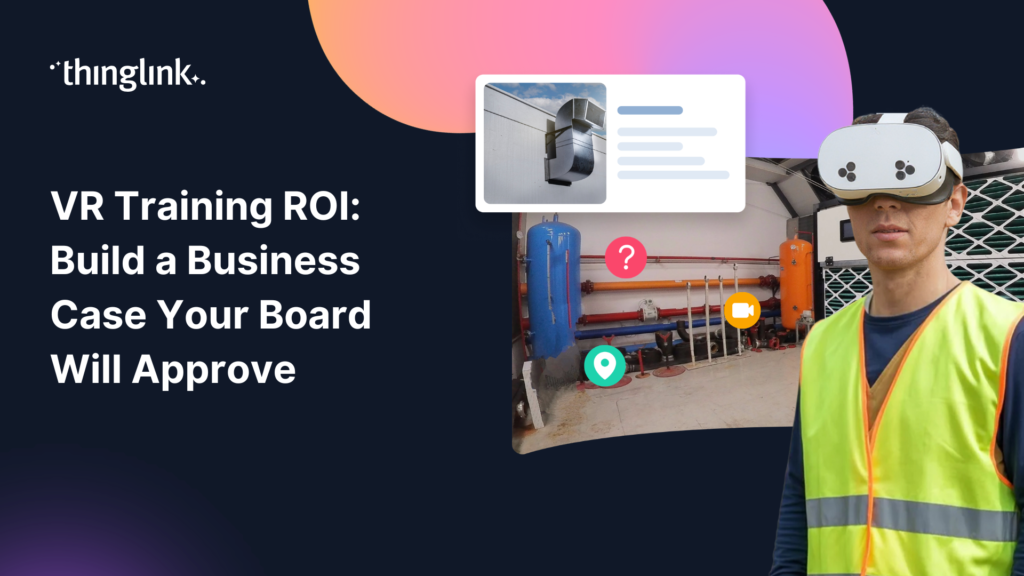
VR Training ROI: The Numbers L&D Managers Need to See
You're under pressure to prove that every training pound or dollar is well spent. So when someone suggests replacing classroom sessions or e-learning modules with virtual reality training, the first question is always the same: what's the return on investment?
It's a fair question. VR training requires upfront thought, planning, and sometimes new tooling. But the evidence for its ROI is growing — and for L&D managers willing to look at the full picture, the numbers are genuinely compelling.
This post breaks down what VR training ROI actually looks like, where the real savings come from, and how platforms like ThingLink make it possible to build immersive experiences without a six-figure production budget.
Why Traditional ROI Models Undervalue VR Training
Most L&D teams are used to measuring ROI in fairly narrow terms: cost per learner, completion rates, and post-training assessment scores. These metrics matter, but they miss a significant part of the value that immersive training creates.
VR training doesn't just deliver information — it builds competence. Learners practice real tasks, make decisions under simulated pressure, and experience consequences in a safe environment. That shift from passive consumption to active experience changes what learning actually sticks.
When you factor in reduced incident rates, faster onboarding, lower travel costs, and the ability to scale training without proportionally scaling cost, the ROI calculation looks very different from a standard e-learning comparison.
The Core ROI Drivers: Where the Value Actually Comes From
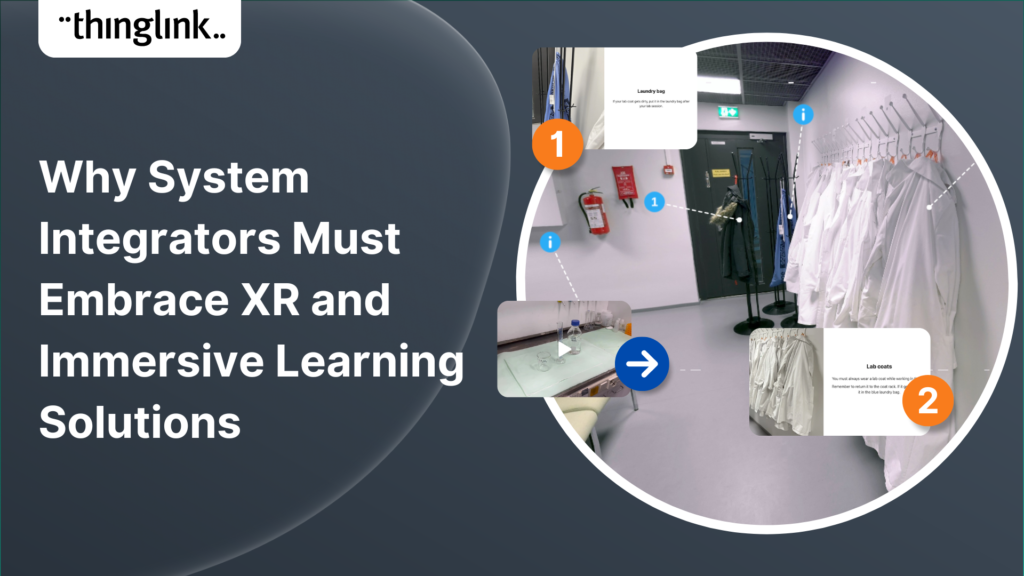
In action! Explore this example.
1. Reduced Training Time
Immersive, scenario-based training consistently outperforms traditional methods on time-to-competency. When learners are placed in realistic virtual environments that mirror their actual job context, they build practical understanding faster than they would through video or slides.
For high-volume onboarding programmes — think retail, logistics, healthcare, or manufacturing — shaving even a few hours off the average time-to-readiness per employee adds up quickly at scale.
2. Lower Incident and Error Rates
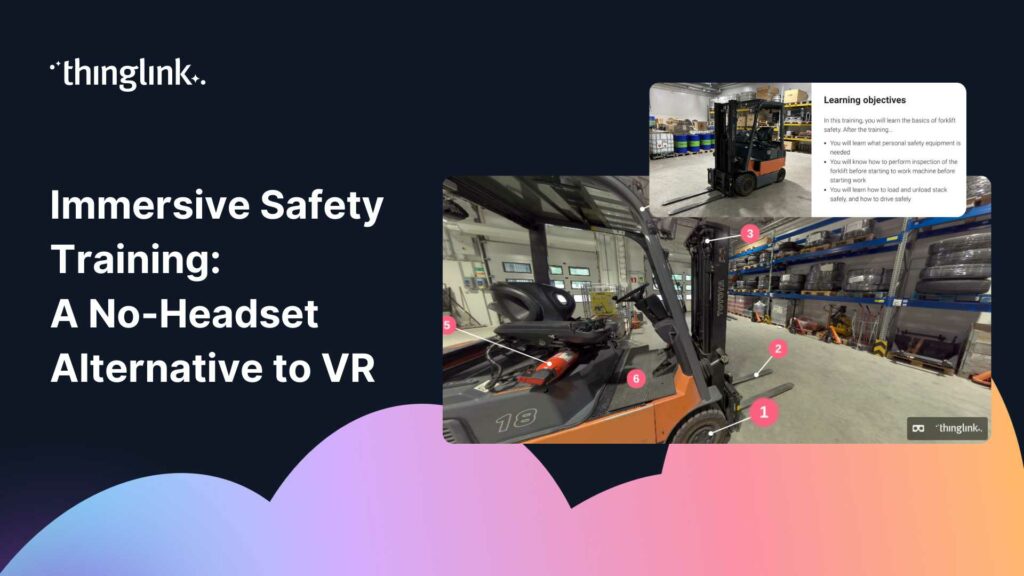
This is where the numbers get particularly striking for safety-critical industries. When employees have rehearsed emergency procedures, hazard identification, or equipment handling in a virtual environment, they perform better in real situations.
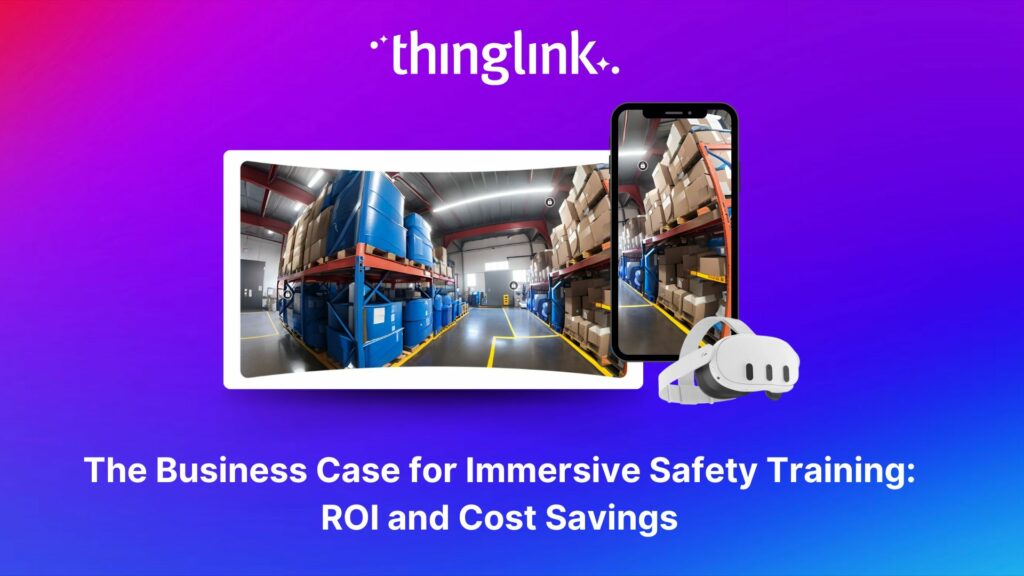
Fewer workplace incidents mean fewer costs: reduced insurance claims, lower downtime, less legal exposure, and most importantly, fewer people getting hurt. If your organisation operates in a sector where a single serious incident carries six or seven-figure consequences, the ROI case for immersive safety training is hard to argue against.
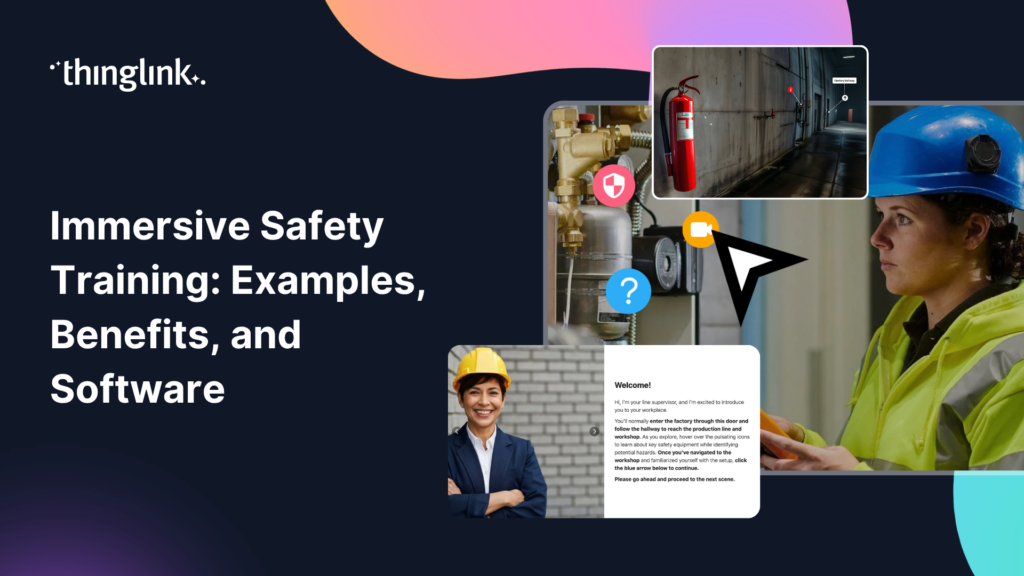
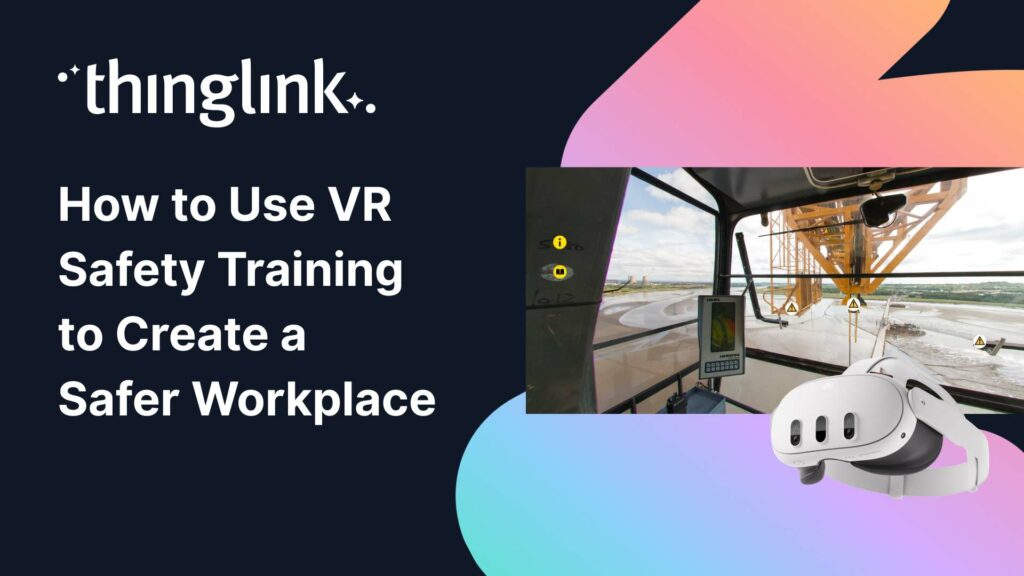
ThingLink has published a dedicated breakdown of this for safety-focused teams. You can read the full analysis in The Business Case for Immersive Safety Training: ROI and Cost Savings.
3. Travel and Venue Elimination
For organisations with geographically distributed teams, the logistics of in-person training are expensive. Flights, accommodation, venue hire, facilitator time, and the productivity cost of taking people off-site all add up.
Virtual training environments remove these costs almost entirely. A learner in one country can move through the same immersive scenario as a colleague in another, with no travel required and no consistency lost. The learning experience is identical every time.
4. Scalability Without Proportional Cost Growth
This is one of the most underappreciated advantages of digital immersive training. Once a virtual experience is built, it can be deployed to hundreds or thousands of learners at a marginal cost per additional user.
Compare that to instructor-led training, where each cohort requires fresh facilitator time, space, and materials. As your workforce grows, virtual training scales with you — your cost-per-learner curve bends downward rather than staying flat or rising.
5. Knowledge Retention That Lasts
Retention is the metric that most e-learning fails quietly on. Learners may complete a module and pass an assessment, but the knowledge fades fast if it was never applied in context.
Research consistently shows that active, experiential learning produces stronger long-term retention than passive formats. When learners have physically navigated a virtual environment, made choices, and seen the results of those choices, the experience is encoded differently in memory. You can explore the latest evidence on this in Latest Research into VR Methods of Employee Training: What You Need to Know.
Real Organisations, Real Results
ROI arguments are more convincing with concrete examples. Here are two ThingLink customer stories that illustrate what's possible.
Stora Enso: Scaling Safety Training with VR
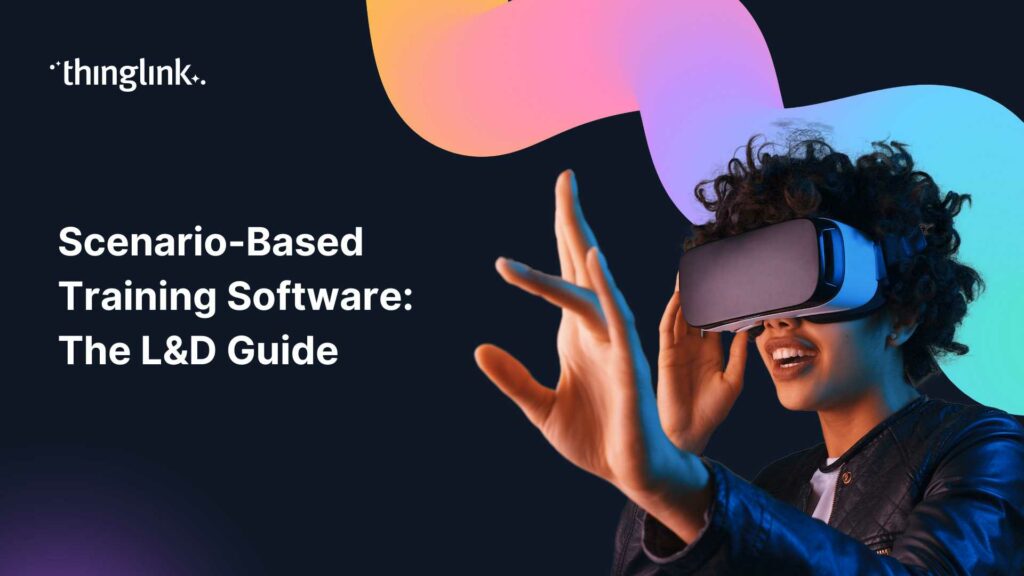
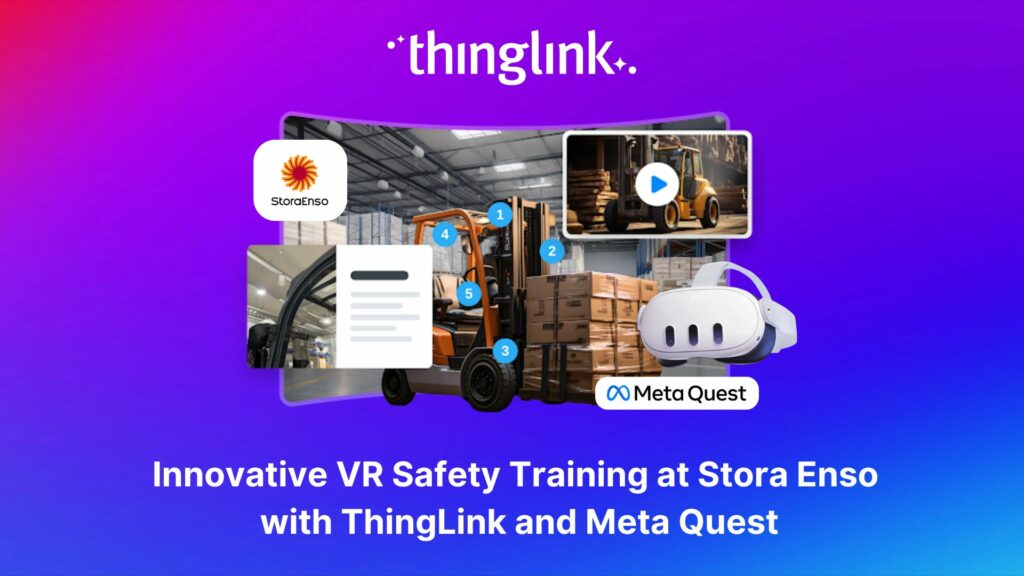
Stora Enso, a global packaging and biomaterials company, used ThingLink together with Meta Quest headsets to create immersive safety training for employees across their operations. The goal was to give workers hands-on experience of safety protocols in a realistic virtual environment before they encountered those situations for real.
The result was a scalable, repeatable training experience that could be deployed across sites without bringing people to a central training facility. You can read the full story here: Innovative VR Safety Training at Stora Enso with ThingLink and Meta Quest.
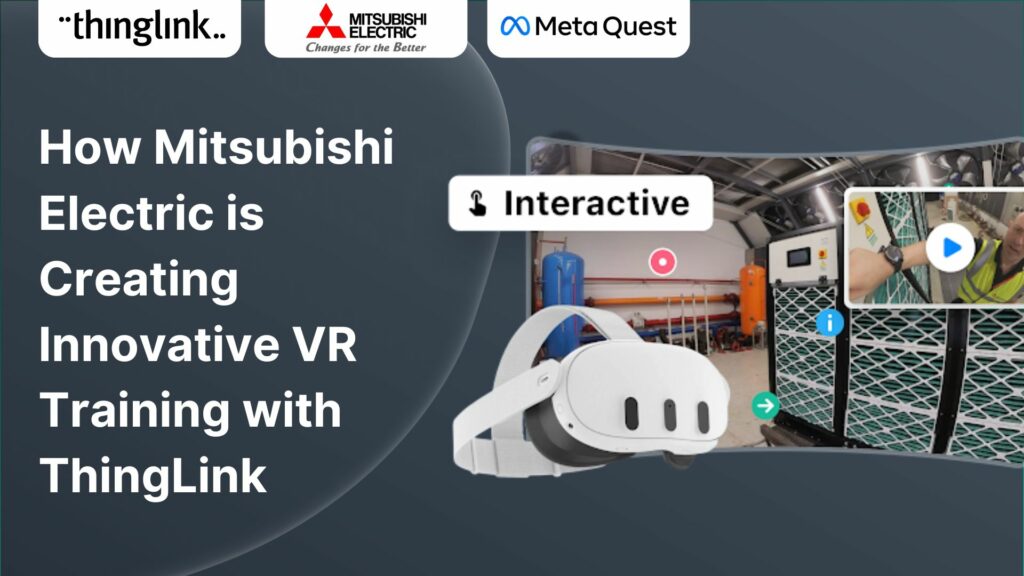
Mitsubishi Electric: Technical Training Transformed
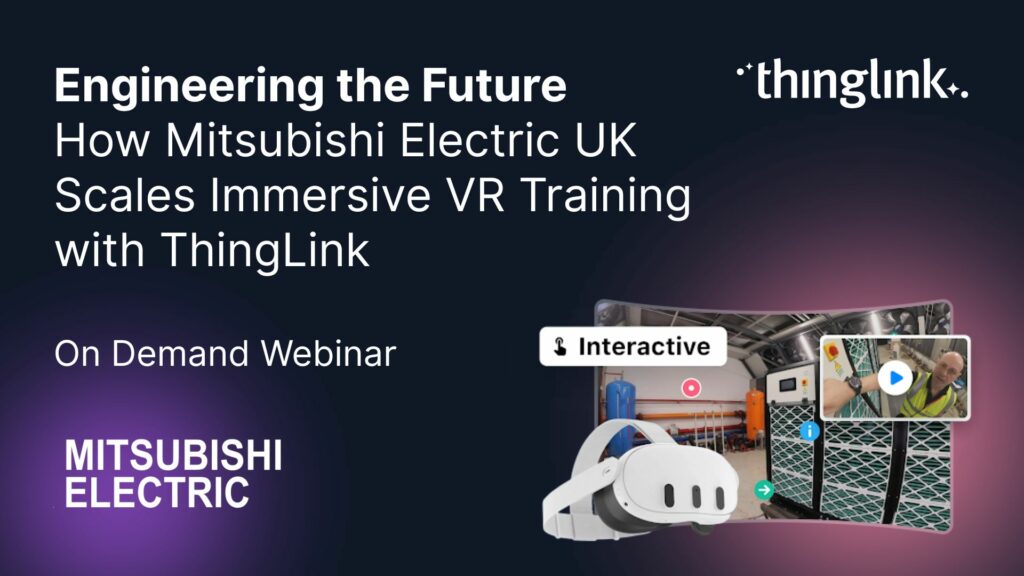
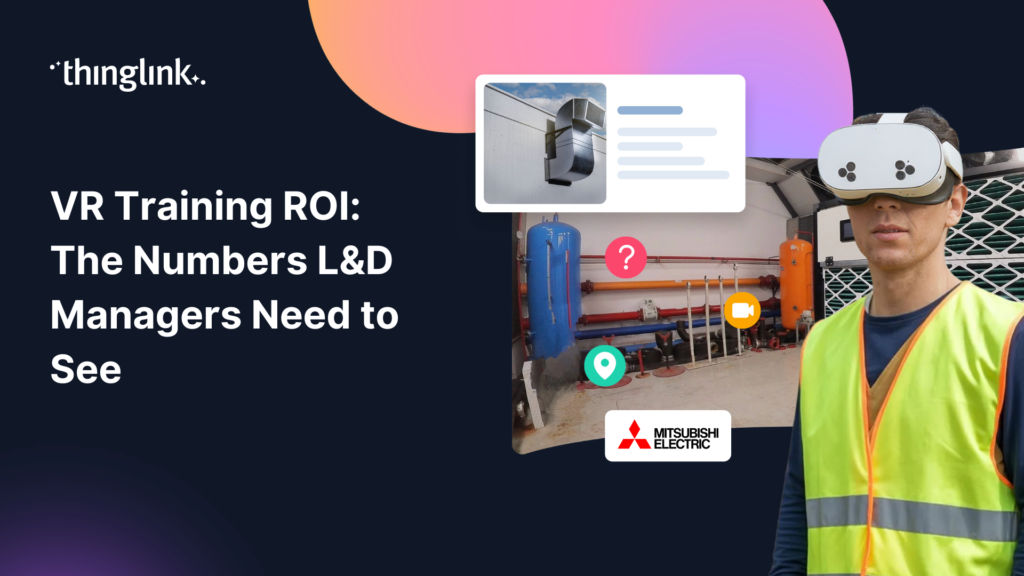
Mitsubishi Electric worked with ThingLink to build innovative VR training for their technical workforce. By recreating realistic equipment environments virtually, they were able to give engineers and technicians a way to build familiarity and skill before working on live systems.
This approach reduces the risk of errors during real-world procedures and shortens the learning curve for complex technical tasks. See how they did it: How Mitsubishi Electric is Creating Innovative VR Training with ThingLink.
What Does VR Training Actually Cost to Build?
This is where many L&D managers hesitate, and it's worth being honest about the range.
High-end custom VR experiences built by specialist agencies can cost tens of thousands. But that's not the only option, and for most organisations, it's not the right starting point.
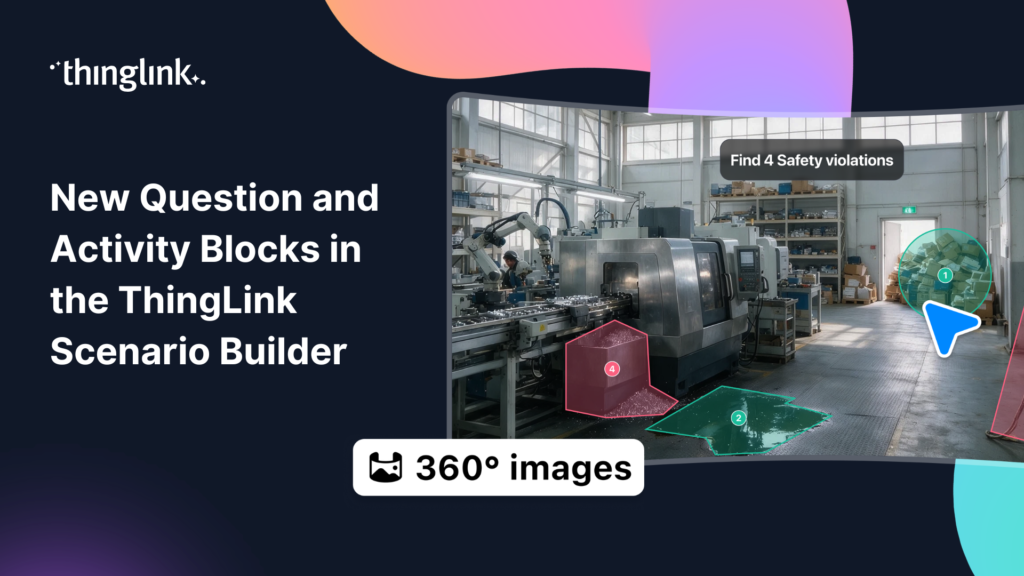
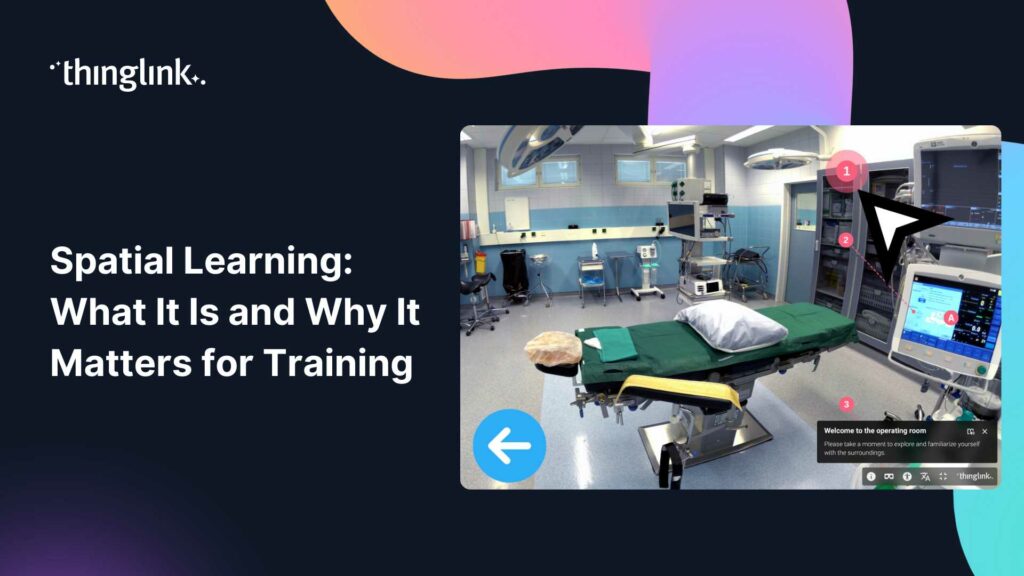
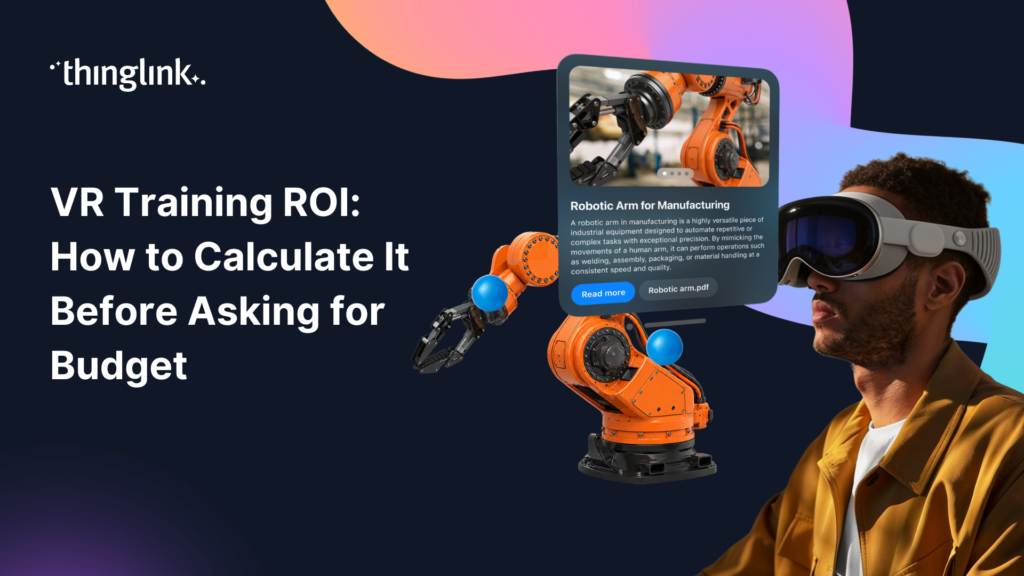
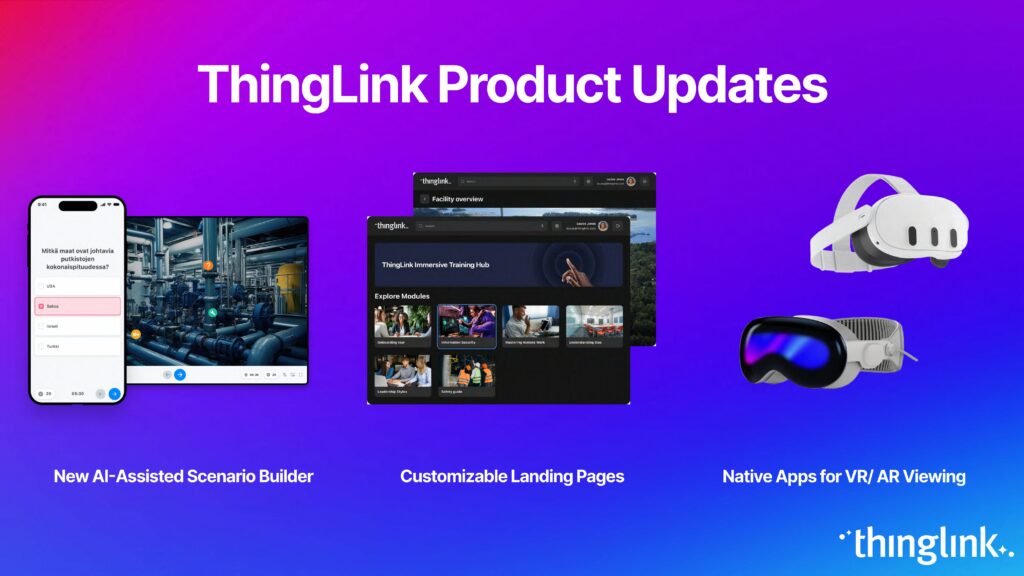
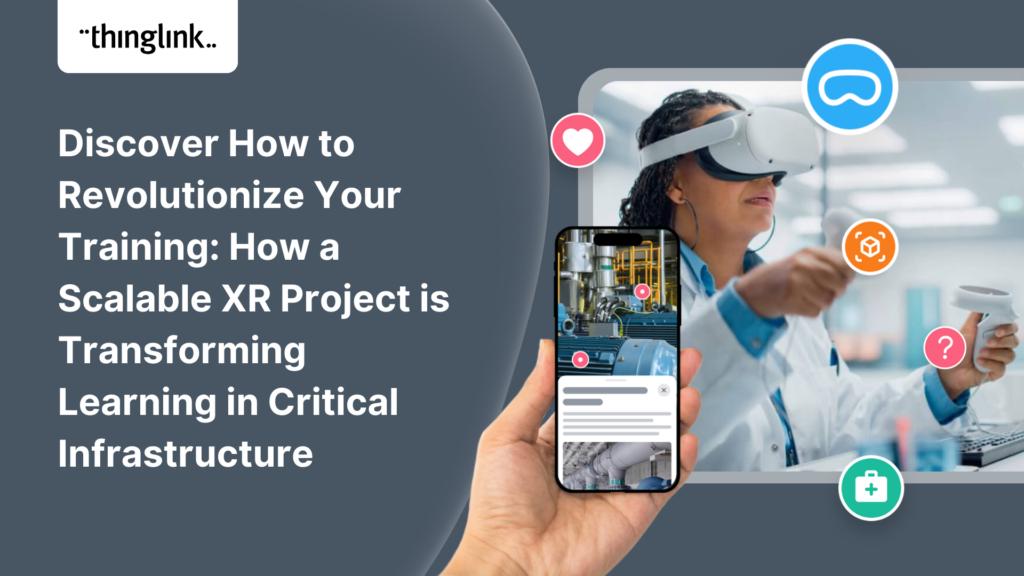
Platforms like ThingLink are specifically designed to let L&D teams build immersive, interactive training experiences without requiring a development team or a large production budget. You can create scenario-based virtual environments using 360° images or video, add interactive decision points, embed assessments, and deploy across devices — including Meta Quest headsets for full VR, or standard browsers for learners without headsets.
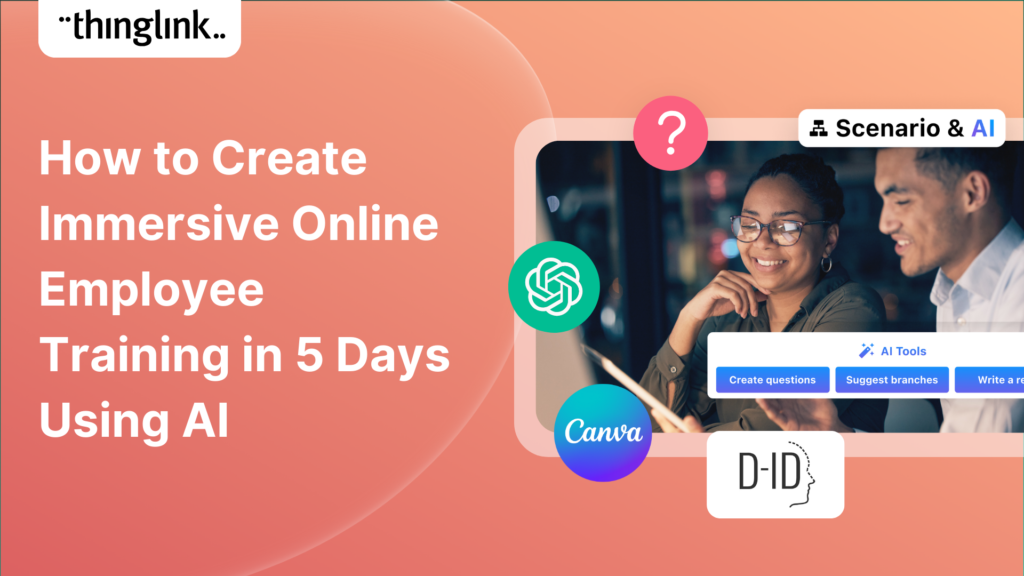
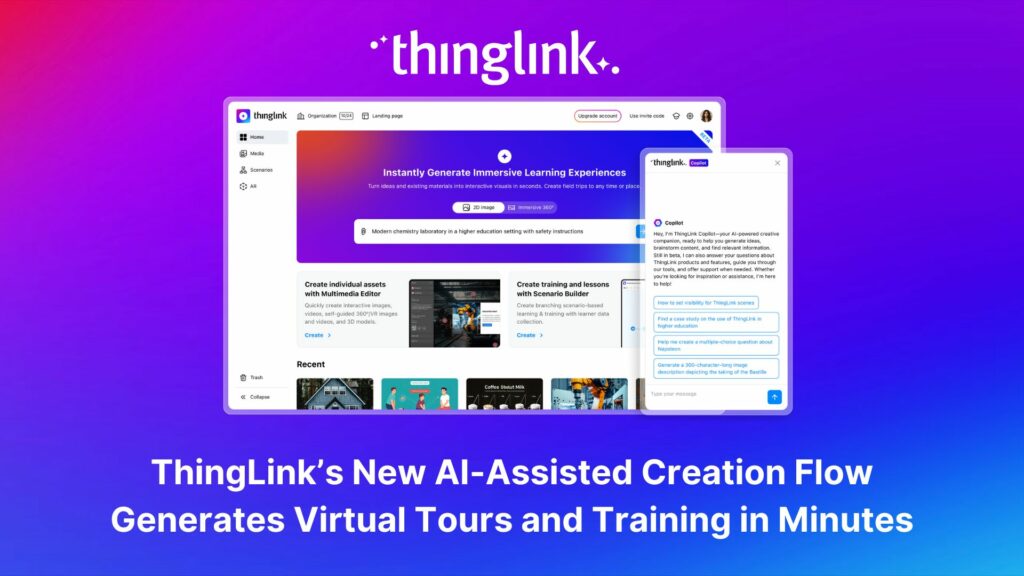
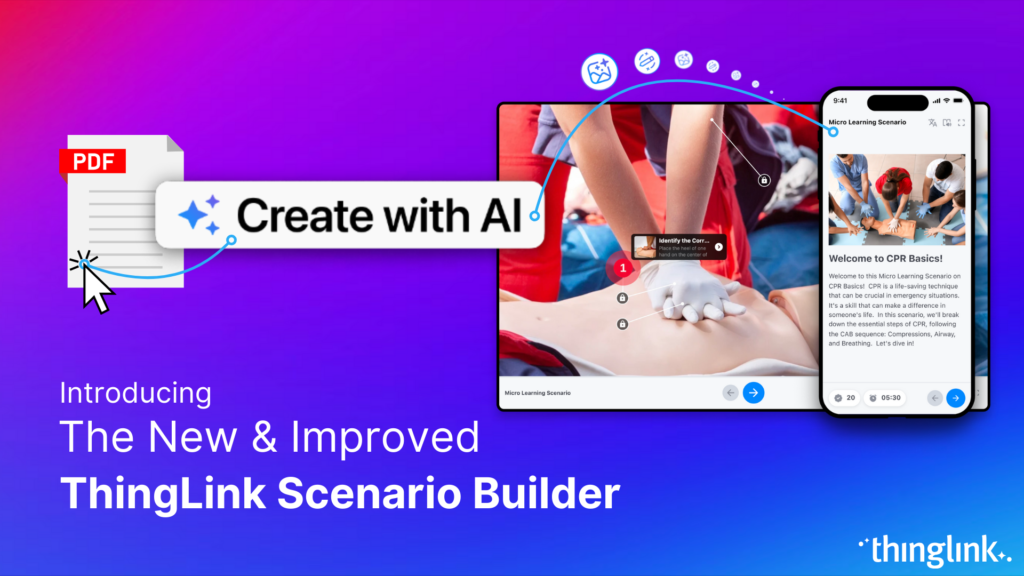
AI tools within ThingLink can further accelerate content creation. If you want to understand how quickly a team can move from brief to deployable content, this post is worth reading: How to Create Immersive Online Employee Training in 5 Days Using AI.
For a deeper look at the technical side of building virtual training environments, see How to Create Virtual Training Environments for Students and How to Create Realistic Virtual Learning Environments for Trainees.
Building Your Internal Business Case
If you're preparing to make the case to stakeholders, here's a practical framework for structuring your argument.
Start With a High-Stakes Use Case
Don't try to justify VR training for everything at once. Pick the use case where the cost of poor performance is highest — a safety risk, a compliance requirement, a complex technical skill — and model the ROI there first.
A focused pilot is far easier to approve than a wholesale programme change, and a successful pilot does your advocacy work for you.
Identify Your Baseline Costs
Before you can show a return, you need a clear picture of what you're currently spending. Break down your existing training costs for the target use case: facilitator time, venue, travel, materials, lost productivity during training, and any incident or error costs attributable to training gaps.
This baseline is your comparison point. VR training ROI is most visible when placed against a realistic picture of current spend.
Model Across Multiple Cohorts
VR training content is built once and deployed many times. Make sure your ROI model reflects this. Calculate your cost-per-learner for year one, then show how it changes in year two and three as the same content reaches more people.
This multi-year view is often what shifts the conversation from "interesting" to "approved."
Include Soft ROI Indicators
Not every benefit shows up directly in a spreadsheet. Learner confidence, training satisfaction scores, and manager-reported readiness are all worth capturing. They strengthen your qualitative case and often reveal impacts that the financial model misses.
Beyond Safety: Where Else Does VR Training Deliver ROI?
Safety training gets the most attention in VR ROI discussions, but the value extends well beyond it.
Customer service and soft skills training benefits enormously from scenario-based practice. Learners can rehearse difficult conversations, de-escalation, and customer interactions in a low-stakes environment before they face the real thing. ThingLink has explored this in depth in a dedicated webinar resource: How to Create Immersive Customer Service Skills Training with ThingLink.
Technical and vocational training is another area where immersive environments deliver clear returns. When equipment access is limited, expensive, or genuinely dangerous, virtual replicas give learners the repetitions they need. See more on this topic at How Immersive Learning Can Transform Technical and Vocational Education.
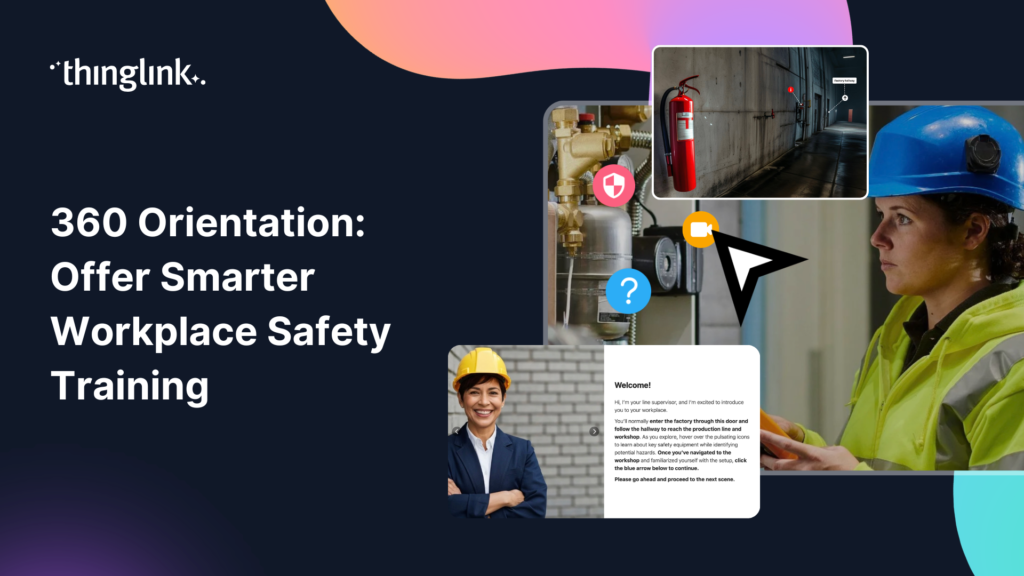
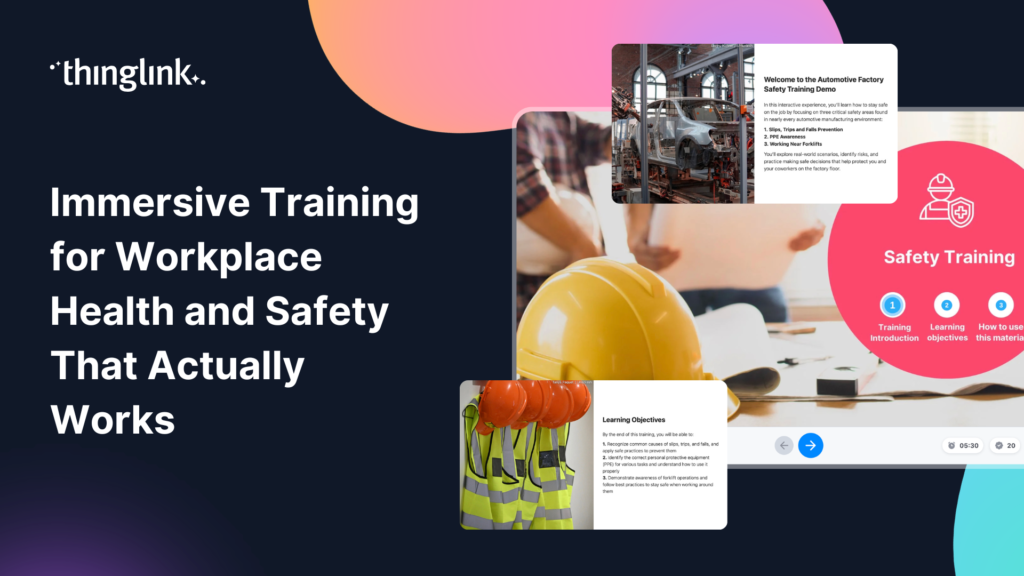
Workplace health and safety programmes across all sectors benefit from immersive training approaches — not just high-hazard industries. Immersive Training for Workplace Health and Safety That Actually Works covers this in practical detail.
The Bottom Line for L&D Managers
VR training ROI is real, measurable, and increasingly well-documented. The clearest returns come from reduced incidents, faster time-to-competency, eliminated travel costs, and the scalability of reusable content.
The barrier to entry is lower than many L&D managers assume. With the right platform, a team that already understands its learning objectives can build and deploy immersive training without a specialist development agency.
If you're ready to see what that looks like in practice, explore how ThingLink supports VR and immersive employee training at Transform Employee Training With ThingLink XR on Meta Quest.
The question isn't whether VR training delivers ROI. For a growing number of organisations, the question is how quickly they can get started.