How ThingLink Was Used to Recreate Roswell Museum’s Workshop as a Virtual Learning Experience
Background: A Museum Lost to Flooding
When catastrophic flooding occurred at the Roswell Museum in New Mexico in October 2024, the loss went far beyond physical space. The museum was home to nearly 12,000 objects consisting of permanent collection items as well as loaned items and archive materials. Its museum exhibits and stores contained over 500 years of cultural history, including artifacts dating back to the Spanish Colonial Period.
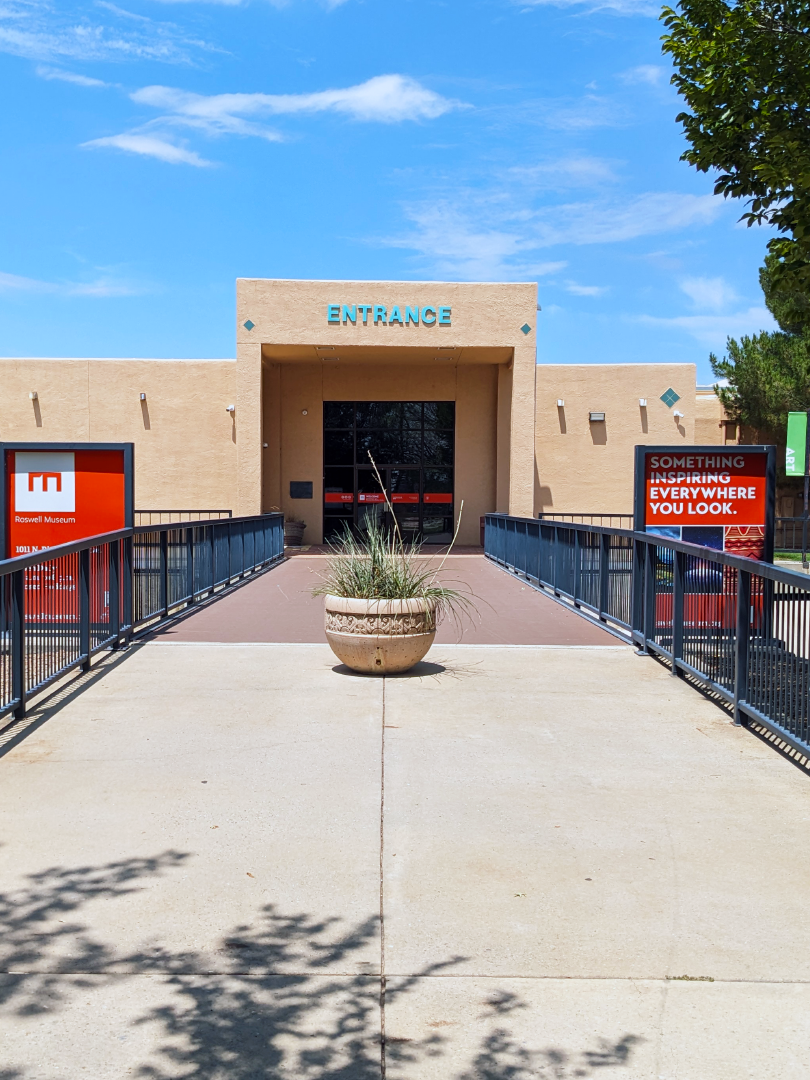
After flood waters receded, items were salvaged and some shipped to the Smithsonian for possible restoration. Since the flood, the museum has been closed with the reopening date to be determined. With the physical collection inaccessible, the museum urgently needed a way to preserve, interpret, and share its heritage digitally with educators and the public.
Book a free consultation
If you’d like to learn more about how you can use ThingLink in K-12, Higher, Vocational or Museum Education, book a free call with our Education Specialist today.
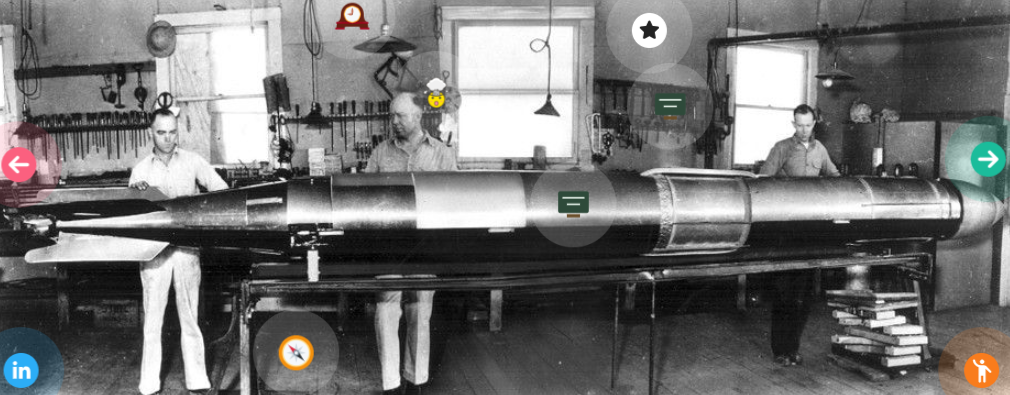
One of the irreplaceable spaces which was tragically lost was the Robert H. Goddard Rocketry Collection, including Professor Goddard’s original workshop space, as well as research and scientific artefacts dating from the birth of modern rocketry and space flight. This loss was particularly significant given that 2026 was set to be the national Goddard “First Launch” Centennial Anniversary – celebrating 100 years since the first modern rocket launch.
Educator C. Catalina Collins had recently moved to New Mexico from California, and at a community meeting, she learned about the devastation and the museum’s uncertain future. Seeing both a crisis and an opportunity, Cat reached out to the museum with an idea: to recreate the destroyed workshop as an interactive virtual exhibition that could inspire children and reconnect the museum with educators.
Project Vision: Rebuilding Access Through Virtual Experience
Cat proposed translating the lost physical space into an online learning environment that would let students experience the workshop from anywhere. For the museum, this virtual space would provide a permanent digital interpretation of a destroyed archive space – preserving institutional memory, maintaining public engagement during closure, and extending access beyond geographic and physical limitations.
The goal was twofold:
- Preserve the educational and scientific value of the destroyed workshop using digital content.
- Create an engaging science experience that teachers could easily use in classrooms.
After initial meetings in November, the museum granted permission to proceed. Cat began building the project in early December and completed the first version of the interactive tour by the end of the year.
Choosing ThingLink: Designing for Immersion and Access
Using ChatGPT to explore possible tools, Cat identified ThingLink as the best platform for creating a layered, interactive resource. The design of the user experience was intentional:
- Teachers should be able to understand and navigate the experience in about 10 minutes.
- Students should be able to explore for much longer, discovering content at their own pace.
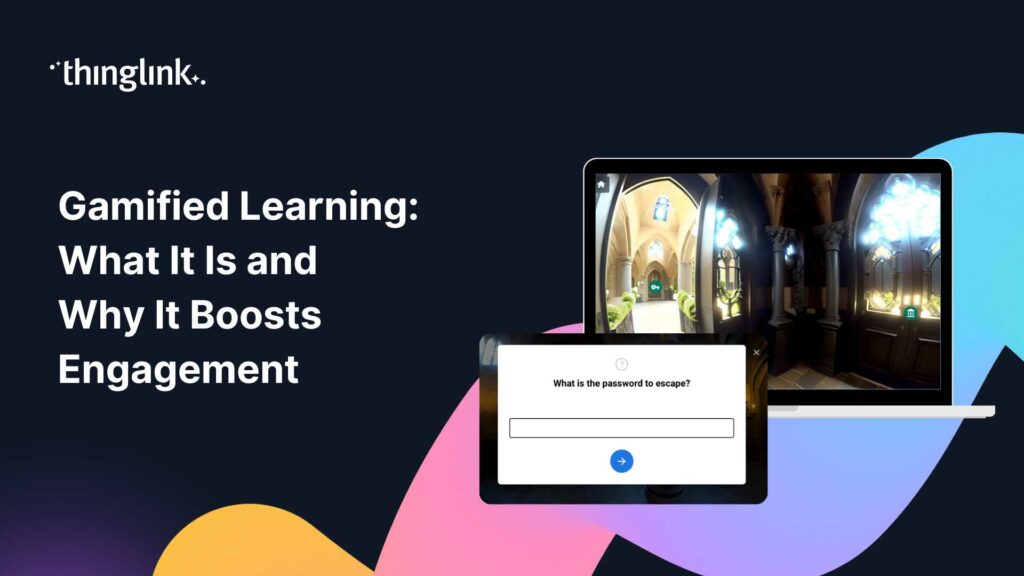
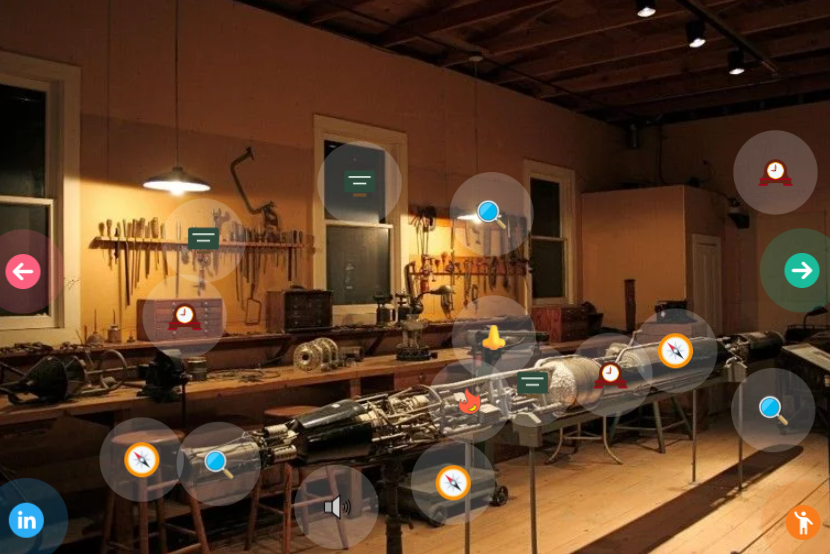
Cat focused on creating a multi-sensory experience using visuals, audio, information panels, and animated tags layered onto archive photographs of the workshop. The goal was to make users feel as though they were standing inside the lab – without requiring virtual reality headsets.
The experience emphasized an important message: rocket science was built by creative and persistent people using everyday tools, sometimes in garages and workshops. Curated sound design, including classical music and ambient workshop noise, reinforced that atmosphere.
Execution and Reception: A Powerful First Impression
A critical factor in the project’s success was the user-friendly and intuitive design of ThingLink itself. Although Cat was a brand-new user of the platform, she was able to independently design, build, and polish the entire immersive experience in just two weeks. Without a technical team or prior training, Cat quickly mastered layering media, adding audio, tagging content, and structuring learning pathways. This ease of use allowed Cat to focus on pedagogy and storytelling rather than technical hurdles, demonstrating how accessible ThingLink is for educators looking for new ways to create sophisticated digital learning environments without specialized production or graphic design skills. Visit the interactive experience on the Roswell Museum website below.
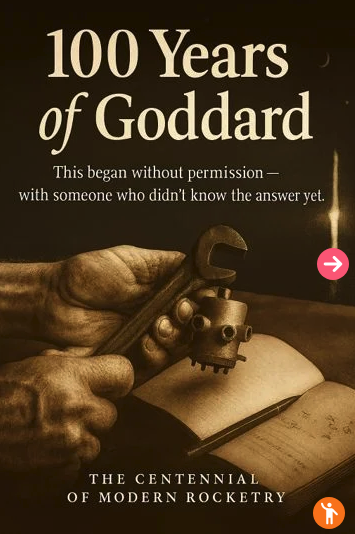
The finished interactive experience exceeded expectations. The interactive elements – audio narration, pulsing tags, and layered information panels – make the resource highly engaging. The museum experience does more than simply replace a lost space; it has transformed it into an educational ecosystem that is able to reach far beyond the museum’s walls. For museum staff, the tour could also become a flexible interpretation tool – one that could support outreach, donor engagement, school partnerships, and future exhibitions once the museum reopens.
Educational Impact: Differentiation, Enrichment and Scalability
Cat quickly recognized ThingLink’s broader potential. Once familiar with the tool, she was able to create additional enrichment tours in about 20 minutes each, including AI-generated imagery and tagged content.
Cat describes ThingLink as the “best edtech tool” she had seen in a decade, in part because of its ability to support differentiation:
- Younger or struggling learners could access basic explanations.
- Advanced students could explore deeper scientific concepts.
The resource also introduces students to the purpose and mission of museums, including conservation, interpretation, access, ethics and education – helping learners understand how museums preserve knowledge as well as display it.
In addition, it includes links for educators to generate NGSS standards-aligned Forces & Motion lesson plans. Educators can select a grade band, rocket activity, and optional enrichment focus to build a complete lesson sequence. This addition makes Cat’s ThingLink a complete classroom-ready resource for teachers who might feel unsure about teaching science. Hear from Cat below as she describes the experience of ideating, designing and creating this powerful resource.
Sharing the Experience and Long-Term Vision
The Roswell Museum now hosts the ThingLink tour directly on its website and you can visit it here. During the centennial year the resource will remain freely available for educators and students. Importantly, it can be viewed on any screen including smartphones and other mobile devices. The virtual workshop will continue to preserve and share the museum’s legacy – even while the real-life building remains closed.
Cat also submitted the project for awards consideration, including the National Science Teaching Association’s elementary teaching award, with the hope of encouraging and supporting elementary teachers who may feel hesitant about teaching science.
Conclusion: Turning Loss into Lasting Access
Through ThingLink, Cat was able to transform the remains of a destroyed workshop into an opportunity for innovation and inspiration. The project not only recreated a lost learning space but expanded its reach worldwide – offering an immersive, interactive science experience that can be accessed from anywhere.
In doing so, Cat helped the Roswell Museum maintain its educational mission, reconnect with schools, and preserve this incredible story until the doors can finally reopen. Her project serves as a versatile template for educators and museum curators.
Read more: City of Roswell Museums
In the decades following Robert H. Goddard’s history-changing rocket tests, Roswell, New Mexico entered the public imagination through the events of 1947, when a mysterious crash outside town was first reported as a “flying disc” and later reclassified by the U.S. military as a weather balloon. That reversal ignited decades of speculation and fascination with extraterrestrial life. Over time, Roswell has embraced this moment of Cold War secrecy and transformed it into a defining cultural identity.
Today, Roswell stands at the intersection of science and myth: Goddard’s very real legacy of spaceflight, alongside enduring questions about the universe. Roswell is also home to a vibrant and thriving arts community. Beyond the Roswell Museum, the city’s cultural lineup includes: the Anderson Museum of Contemporary Art which anchors a nationally-recognized contemporary scene; Bone Springs Art Space showcasing experimental, artist-driven work; as well as the Miniatures and Curious Collections Museum; the Space Toys Gallery; and the UFO Spacewalk.
Other Case Studies in Museum Education and STEM
Nottingham College’s Virtual Event shared in multiple formats

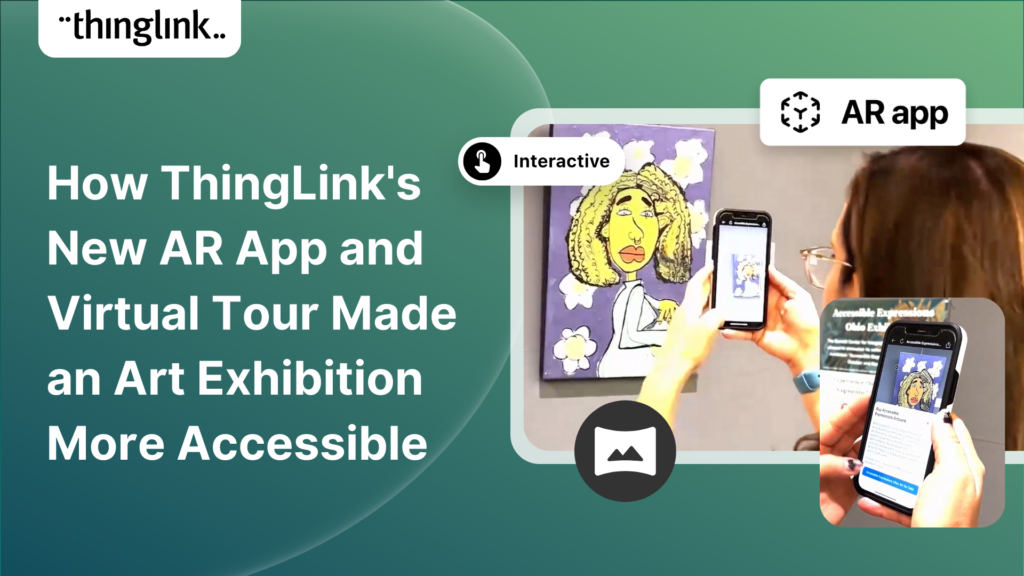
Virtual Art Gallery created with ThingLink Augmented Reality App
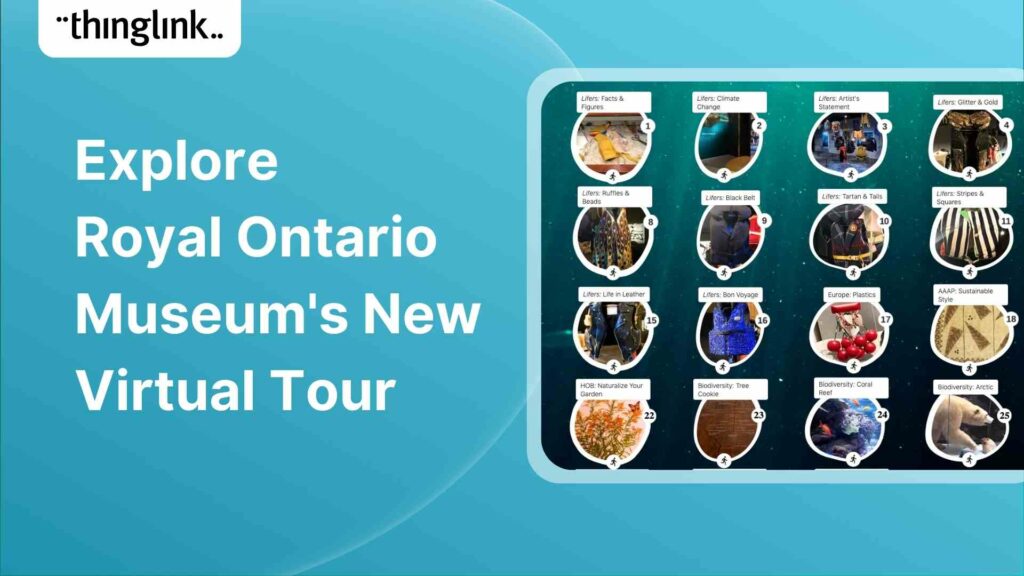
ROM Virtual Museum Tour
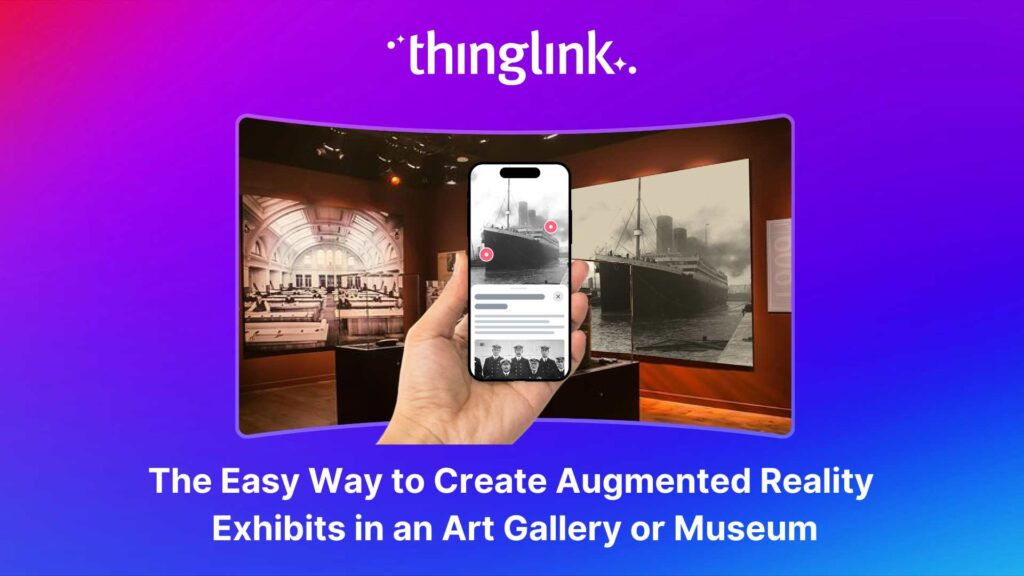
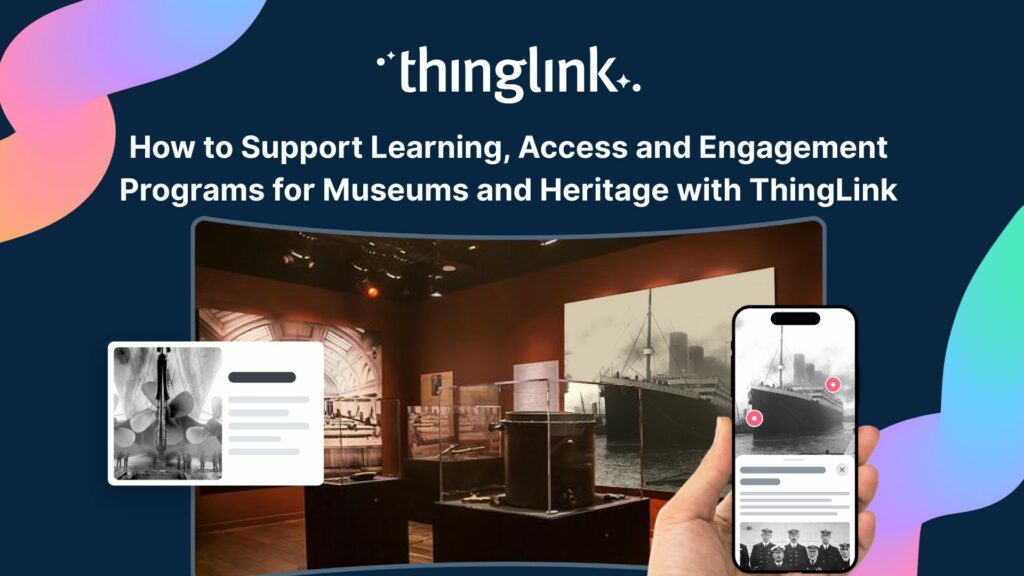
Support Learning, Access and Engagement Programs for Museums – Virtual and Online Exhibitions, Augmented Reality
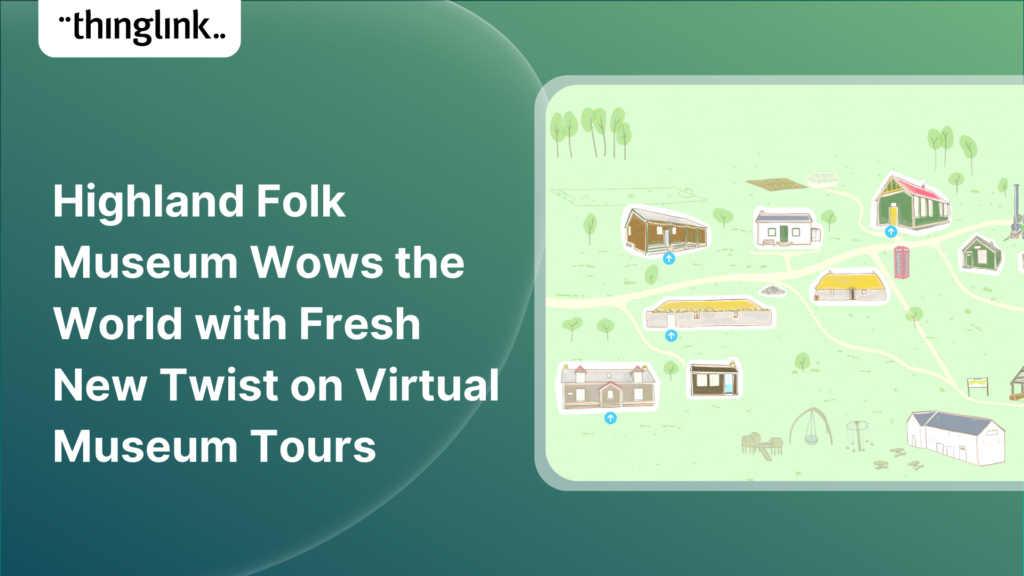
A virtual walkthrough of the Highland Folk Museum including 3D models of real world artefacts
Book a free consultation
If you’d like to learn more about how you can use ThingLink in K-12, Higher, Vocational or Museum Education, book a free call with our Education Specialist today.